You’ve just completed a beautiful interior renovation — elegant wall panels, a fresh aesthetic, a space you’re proud of — only to return a season or two later to find warping boards, peeling surfaces, or dark patches of moisture damage. If you’ve worked with traditional wood wall panels, this scenario might be painfully familiar. Wood has been a beloved building material for centuries, but in modern construction, its limitations are becoming increasingly hard to ignore. Enter WPC — Wood Plastic Composite — a material that is quietly revolutionizing the wall panel industry. Whether you are a contractor sourcing materials for a large commercial project, an interior designer who demands reliable long-term performance, or a buyer importing wall panels at scale, one question is worth asking: Is it time to replace wood wall panels with WPC?
Table of Contents
Quick Answer
WPC (Wood Plastic Composite) wall panels outperform traditional wood wall panels in almost every measurable way. WPC is 100% waterproof and moisture-resistant, making it ideal for high-humidity environments like bathrooms, kitchens, swimming pools, and outdoor facades — areas where wood would quickly warp, rot, or swell. WPC panels require no regular painting, sealing, or staining, dramatically reducing long-term maintenance costs. Unlike solid wood, WPC maintains dimensional stability across temperature and humidity fluctuations, preventing cracking and splitting. Environmentally, WPC is made from recycled wood fiber and reclaimed plastic, offering a sustainable alternative to virgin timber. With a service life of 15 to 25+ years and near-zero maintenance requirements, WPC wall panels deliver a significantly lower total cost of ownership compared to wood — making them the smarter, future-proof choice for both residential and commercial applications worldwide.
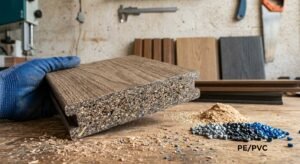
What Exactly Is WPC?
Before diving into the comparison, it helps to understand what WPC actually is. WPC stands for Wood Plastic Composite — a hybrid material that combines natural wood fiber (typically sawdust, wood flour, or bamboo fiber) with thermoplastic polymers such as PVC, PE, or PP, along with binding agents and UV stabilizers. The result is a material that looks and feels like real wood but inherits the best properties of both its components: the natural warmth and texture of wood, combined with the waterproofing, durability, and low-maintenance characteristics of engineering-grade plastic.
WPC wall panels are manufactured through an extrusion or compression molding process, allowing them to be produced in a wide variety of colors, textures, and surface finishes — from rustic woodgrain to sleek modern surfaces. They can replicate the appearance of oak, teak, pine, walnut, or any other timber species, making them a visually attractive alternative that is virtually indistinguishable from real wood at a glance.
Today, WPC products are used extensively in wall cladding, ceiling panels, decking, flooring, fencing, and pergolas across residential, commercial, and industrial projects worldwide. The growing global adoption of WPC is not a coincidence — it is a direct response to the well-documented shortcomings of traditional wood that contractors, architects, and property developers can no longer afford to overlook.
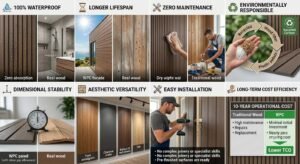
8 Key Reasons WPC Wall Panels Outperform Traditional Wood
1. 100% Waterproof and Moisture-Resistant
This is perhaps the most significant advantage WPC holds over wood. Traditional wood is an organic, porous material that absorbs water. When exposed to moisture, wood swells, warps, and eventually begins to rot. In humid climates, coastal regions, or wet interior spaces like bathrooms and kitchens, wood wall panels can deteriorate within months if not properly sealed and maintained — and even then, the deterioration is usually just slowed, not stopped.
WPC, by contrast, does not absorb water. Its thermoplastic matrix seals the wood fiber within, preventing moisture from penetrating the surface. This makes WPC wall panels completely suitable for environments where wood would fail:
- Bathroom and wet room wall cladding
- Kitchen backsplash and wall panels
- Outdoor building facades and exterior cladding
- Poolside walls, spa environments, and wellness facilities
- Basement walls and damp-prone areas
In tropical and humid regions — including Southeast Asia, the Middle East, West Africa, and coastal Europe — WPC wall panels have become the preferred solution for architects and contractors who need reliable, long-term performance without a constant battle against moisture damage.
2. Exceptional Durability and a Longer Lifespan
Wood wall panels, even high-quality hardwoods, are vulnerable to the elements. UV radiation causes surface fading and degradation. Insects — particularly termites and woodborers — can silently destroy a wooden structure from within. Seasonal temperature changes cause wood to expand and contract, leading to cracks, splits, and structural weakening over time. These are not edge cases; they are the natural, expected behavior of an organic material exposed to an outdoor or semi-outdoor environment.
WPC wall panels address each of these vulnerabilities directly:
- UV stabilizers integrated into the composite formula protect against color fading and surface degradation, even under intense sunlight
- The thermoplastic content makes WPC completely impervious to termites, woodborers, and all common wood-destroying insects
- WPC’s composite structure provides superior dimensional stability, resisting expansion and contraction in response to temperature and humidity changes
- WPC is resistant to chemical exposure, mold growth, and mildew, even in persistently damp conditions
The practical result is clear: WPC wall panels typically carry a service life of 15 to 25 years or more, even in demanding outdoor or coastal environments. Premium WPC products from leading manufacturers are often backed by 10- to 15-year warranties — something that is rarely, if ever, offered for untreated or even treated wood panels.
3. Virtually Zero Maintenance
Ask any building owner, facility manager, or property developer what they dread most about wood wall panels, and the answer is usually the same: ongoing maintenance. Wood requires regular painting or staining to prevent weathering, annual sealing to block moisture penetration, periodic sanding to remove surface damage, pest treatment programs, and — eventually — full replacement. These costs accumulate relentlessly over the years, both in materials and in skilled labor.
A wood wall panel installation is not a one-time expense. It is an ongoing operational commitment that never really ends.
WPC wall panels offer a fundamentally different maintenance profile:
- No painting or staining required — the color and texture are integrated throughout the composite panel
- No sealing or waterproofing treatments needed, even for outdoor or high-humidity installations
- Cleaning is simple — a periodic wipe-down with clean water and a mild detergent is sufficient to restore the surface
- No pest control treatments or fumigation required
- The surface resists scratching, scuffing, and minor physical impact better than most softwood species
For commercial property owners managing multiple locations, hotel groups overseeing large portfolios, or renovation contractors who guarantee clients long-term performance, the low-maintenance profile of WPC represents a highly compelling and financially significant value proposition.
4. Environmentally Responsible and Sustainable
The environmental impact of building materials has become a critical consideration for architects, developers, and procurement teams worldwide. Traditional wood wall panels — particularly those sourced from hardwood species — contribute directly to deforestation when not sourced from rigorously certified sustainable forests. Even certified wood often requires significant processing energy, chemical treatment, and long-distance transportation before it reaches a job site.
WPC takes a fundamentally different approach to sustainability:
- Made from recycled wood fiber: WPC typically incorporates sawdust, wood shavings, and agricultural residues that would otherwise go to waste or be incinerated
- Made from reclaimed plastic: Many WPC formulations use post-consumer or post-industrial recycled plastics (PE, PP, or PVC), reducing plastic waste that would otherwise enter landfills or oceans
- Reduces demand for virgin timber: By providing a high-performance wood alternative, WPC helps decrease the volume of trees harvested for construction purposes
- Longer lifespan means fewer replacements: With a 20+ year service life, WPC significantly reduces total material consumption over a building’s operational lifetime
For projects targeting LEED certification, BREEAM compliance, or other recognized green building standards, WPC wall panels can contribute meaningfully to environmental performance scores. For procurement teams and specification writers facing growing scrutiny over supply chain sustainability, WPC offers a defensible, documented alternative to virgin hardwood cladding.
5. Superior Dimensional Stability
One of the most frustrating — and costly — problems with wood wall panels is movement. Wood is hygroscopic, meaning it continuously absorbs and releases moisture from the surrounding air. This causes wood to expand in humid conditions and contract in dry ones. Over time, this constant movement leads to visible gaps between panels, surface buckling, warping along the board’s length, and joint failure at connections.
In climates with significant seasonal variation — from the cold winters of Northern Europe and Canada to the hot, humid summers of Southeast Asia and Central Africa — wood movement can cause serious aesthetic and structural problems. Repairing or replacing warped wall panels mid-way through a building’s life is a costly, disruptive, and often embarrassing process for contractors and specifiers.
WPC’s composite structure is inherently more dimensionally stable. While WPC may exhibit minor linear expansion in response to extreme temperature changes — which is why proper installation gap allowances are always recommended — it does not swell from moisture absorption the way natural wood does. WPC panels stay flat, straight, and consistent in shape throughout their entire service life, preserving the aesthetic integrity of the installation for years without remediation.
6. Outstanding Aesthetic Versatility
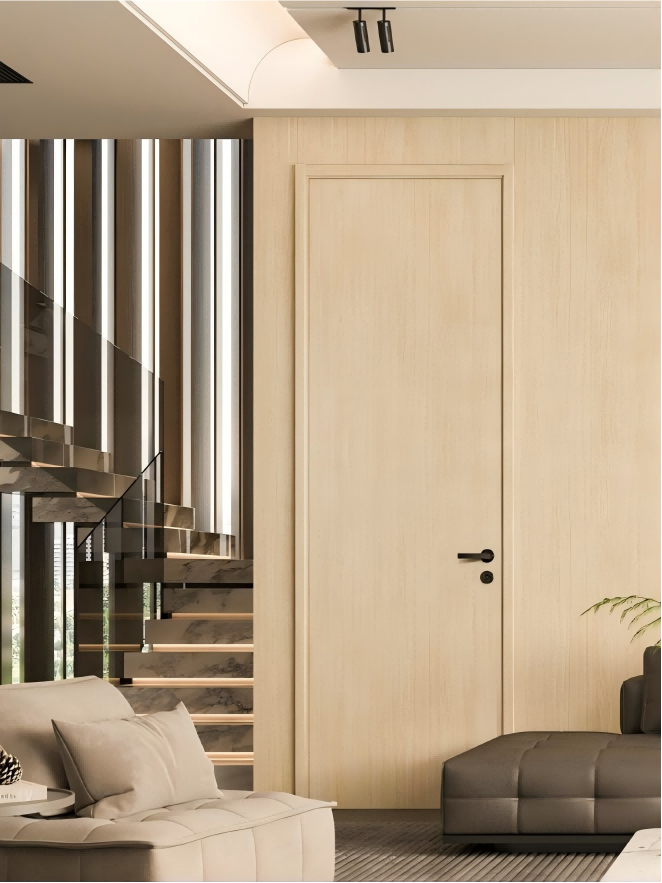
One of the most persistent misconceptions about WPC is that it looks ‘artificial’ or ‘plasticky.’ Modern WPC manufacturing has largely eliminated this concern. The gap in visual quality between today’s premium WPC wall panels and natural wood has narrowed to the point where most end-users cannot distinguish between them without direct comparison.
Contemporary WPC wall panels offer:
- Deep, realistic woodgrain embossing that closely replicates the texture of natural wood species including oak, pine, teak, walnut, bamboo, and cedar
- A wide spectrum of colors — from warm natural tones to contemporary greys, whites, charcoals, and blacks — achieved through co-extrusion and advanced pigmentation technology
- Multiple surface finishes: brushed, sanded, smooth matte, or gloss
- Diverse installation formats: tongue-and-groove planks, large-format flat panels, vertical or horizontal cladding, and decorative 3D wall panels
For large commercial or hospitality projects where visual consistency across hundreds of square meters is essential, WPC’s manufactured uniformity is a significant practical advantage over natural wood, where grain patterns and color variation between individual boards can be difficult — and expensive — to control.
7. Faster and Easier Installation
Time is a critical resource in the construction industry, and WPC wall panels are engineered for installation efficiency. Most WPC wall panel systems are designed with installer convenience in mind:
- Tongue-and-groove or click-lock profiles allow rapid fitting without complex tools or specialist carpentry skills
- Concealed fastener systems eliminate visible screws, nails, or fixing hardware from the finished surface
- Lightweight panels reduce handling effort and labor requirements compared to heavy solid timber boarding
- Pre-finished surfaces require no on-site painting, staining, or varnishing after installation, saving significant time on busy project schedules
- Compatibility with standard wall framing systems, aluminum sub-frames, and conventional furring strips makes WPC easy to integrate into any building system
For contractors managing tight project timelines or multiple concurrent installations, WPC’s ease of installation translates directly into reduced labor hours and faster project handover. For property developers managing multiple build-outs simultaneously, the speed advantage of WPC installation compounds into a meaningful competitive benefit.
8. Better Long-Term Cost Efficiency
On a like-for-like basis, high-quality WPC wall panels may carry a moderately higher upfront cost per square meter compared to basic softwood panels. However, when evaluated honestly over a building’s full operational lifetime, WPC consistently delivers superior total cost of ownership (TCO).
The financial case for WPC becomes clear when all costs are included:
- Elimination of recurring maintenance costs: no painting, sealing, sanding, staining, or pest treatment programs
- Dramatically reduced replacement frequency due to WPC’s superior durability and resistance to environmental degradation
- Lower installation labor costs due to simplified, fast-fit connection systems
- No costly moisture damage repairs, structural remediation, or emergency panel replacements
- Higher building resale value and tenant satisfaction due to premium, long-lasting wall finishes that retain their appearance
A straightforward lifecycle cost analysis typically reveals that WPC wall panels pay for themselves within 5 to 8 years through maintenance and replacement savings alone — and continue delivering positive financial returns for another decade or more beyond that point. For investors, developers, and facility managers thinking in terms of 10- to 20-year operational horizons, the financial case for WPC is compelling.
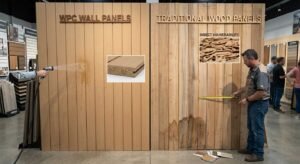
WPC vs Wood Wall Panels: Side-by-Side Comparison
The table below summarizes the key performance differences between WPC wall panels and traditional wood wall panels across the dimensions that matter most to procurement decision-makers:
| Feature | WPC Wall Panels | Traditional Wood Panels |
| Water Resistance | 100% waterproof — no absorption | Porous; absorbs moisture, rots & warps |
| Typical Lifespan | 15–25+ years | 5–15 years (with active maintenance) |
| Maintenance | Minimal — occasional wipe-down | High — painting, sealing, sanding |
| Insect Resistance | Fully resistant (no organic binders) | Vulnerable to termites & woodborers |
| UV Resistance | Built-in UV stabilizers prevent fading | Fades and degrades without treatment |
| Dimensional Stability | High — no swelling or cracking | Low — expands/contracts with humidity |
| Eco-Friendliness | Recycled wood fiber + reclaimed plastic | Requires virgin timber |
| Installation Speed | Fast — click/groove concealed systems | Moderate to slow; on-site finishing needed |
| Aesthetic Options | Wide — colors, textures, finishes | Natural variation; limited color options |
| Total Cost of Ownership | Lower over 10–20 year lifecycle | Higher due to recurring maintenance |
| Warranty Available | Up to 15 years (premium brands) | Rarely offered |

Where WPC Wall Panels Perform Best
WPC’s combination of performance advantages makes it particularly well-suited for specific applications where traditional wood consistently struggles most:
Outdoor Facades and Exterior Cladding
Exposure to rain, UV radiation, high humidity, and extreme temperature variation makes outdoor wall cladding one of the most demanding applications for any building material. WPC handles this environment with ease, maintaining its appearance and structural integrity in conditions that would rapidly degrade even treated wood. For architects and developers specifying exterior cladding in coastal, tropical, or high-rainfall regions, WPC is the clear performance choice.
Interior Wet Areas
Bathrooms, shower rooms, spa facilities, commercial kitchens, and laundry areas present a persistent moisture challenge for wall materials. WPC wall panels eliminate the risk of mold growth, swelling, delamination, and structural deterioration that consistently plagues wood in these environments — delivering clean, hygienic, long-lasting surfaces with no ongoing waterproofing treatments required.
Commercial and Hospitality Interiors
Hotels, resorts, restaurants, retail spaces, and corporate offices benefit from WPC’s combination of visual appeal, durability, and minimal maintenance burden. High-traffic commercial environments demand materials that look exceptional for years without costly or disruptive upkeep — WPC delivers exactly that. Many leading international hotel brands have standardized WPC wall cladding across their properties for precisely this reason.
Residential Feature Walls and Renovation Projects
Homeowners seeking to upgrade their living spaces with a premium wood-look aesthetic but without the ongoing maintenance burden are increasingly specifying WPC. Feature walls in living rooms, wall cladding in bedrooms, balcony and terrace panels, garden walls, and patio surrounds are all ideal applications for WPC’s unique combination of beauty and performance.
Coastal and Tropical Climate Projects
Salt-laden air, persistent high humidity, and intense UV radiation make coastal and tropical environments particularly aggressive on building materials. WPC’s simultaneous resistance to all three of these stressors makes it the material of choice for architects and specifiers working in regions such as Southeast Asia, the Middle East, the Caribbean, West Africa, and coastal Australia.
Addressing Common Concerns About WPC Wall Panels
“Does WPC look fake compared to real wood?”
This was a legitimate concern a decade ago, when WPC manufacturing technology was less advanced. Modern WPC production — including deep embossing, realistic surface texturing, and sophisticated colorfast pigmentation — produces panels that are virtually indistinguishable from natural wood at normal viewing and interaction distances. Many specifiers and end-users report that premium WPC wall panels are actually more visually consistent and commercially attractive than natural wood alternatives, which can vary significantly in grain pattern and color from board to board.
“WPC contains plastic — isn’t that environmentally problematic?”
The plastic content of WPC typically consists of recycled polymers that would otherwise contribute to landfill or ocean pollution. Compared to the environmental cost of felling, processing, treating, and transporting hardwood timber — and then replacing it every few years due to degradation — WPC often represents a net environmental improvement across a building’s lifetime. Many leading WPC manufacturers publish Environmental Product Declarations (EPDs) that provide transparent lifecycle assessment data for specifiers and sustainability auditors.
“Is WPC wall cladding safe for indoor use?”
Reputable WPC manufacturers produce panels that comply fully with international safety standards including RoHS, REACH, and relevant formaldehyde emission standards (typically achieving E0 or E1 classification). When sourcing WPC wall panels — particularly for indoor residential and commercial applications — buyers should request third-party test reports and certificates confirming compliance. Any professional WPC supplier should be able to provide these documents as a matter of course.
“Can WPC panels be repaired if they are damaged?”
Individual WPC panels can be replaced without disturbing the surrounding installation, thanks to the modular tongue-and-groove connection systems used in most product ranges. Minor surface scratches can often be addressed with light sanding or surface treatment products. While WPC cannot be sanded and refinished as extensively as solid hardwood, its superior resistance to damage means that repairs are needed far less frequently — which more than compensates for any limitation in field repairability.

How to Choose the Right WPC Wall Panel Supplier
Not all WPC products are created equal. The quality of WPC wall panels varies significantly depending on the raw material formulation, manufacturing process, and quality control standards applied by the producer. When sourcing WPC wall panels — particularly for large-scale commercial projects, contractor supply programs, or import distribution — evaluate potential suppliers against the following criteria:
Raw Material Quality and Formulation
Confirm the ratio of wood fiber to polymer content, the grade of UV stabilizers incorporated, and the quality of binding agents used. Low-quality WPC formulations may use inconsistent or contaminated recycled content that compromises structural performance, color stability, and long-term durability. Ask for the product’s technical data sheet and request transparency on raw material sourcing.
Manufacturing Certifications and Product Testing
Look for suppliers certified to ISO 9001 for quality management, with products tested and certified to relevant regional standards such as CE marking for the European market, ASTM for North America, or AS/NZS for Australia and New Zealand. For commercial applications, fire rating certifications — typically Class B or Class B1 — may be mandatory under local building codes. Always request third-party test reports covering waterproofing performance, UV resistance, impact strength, formaldehyde emissions, and fire classification.
Sample Evaluation Before Commitment
Always request physical product samples before committing to a large purchase order. Evaluate samples for surface finish quality, weight and density consistency, dimensional accuracy, the precision and ease of the joint connection system, and color consistency across multiple panels from the same production batch. Physical sample evaluation catches quality issues that are invisible in photographs or specification sheets.
Production Capacity, Lead Times, and Customization
Understand the supplier’s production capacity, standard lead times for volume orders, and flexibility for product customization in terms of color, surface texture, panel dimensions, and connection profile. A supplier who can accommodate custom specifications gives you a significant advantage when serving clients with specific design requirements. Confirm that the supplier has the capacity to fulfill your anticipated order volumes reliably and consistently.
Warranty, After-Sales Support, and Long-Term Partnership
Confirm the supplier’s warranty terms in writing, including coverage duration, what failure modes are included, and the claims process. Evaluate their technical support capability, including the availability of installation guidance, product documentation, and responsive customer service. A supplier who provides strong after-sales support reduces your risk profile significantly, particularly when you are importing products for resale or specification into third-party projects.
Conclusion: The Future of Wall Panels Is WPC
Traditional wood wall panels have served the construction and design industries admirably for generations, but the inherent limitations of natural wood — moisture vulnerability, relentless maintenance demands, susceptibility to pests and UV degradation, and significant environmental impact — make them an increasingly difficult choice to justify in the context of modern construction priorities.
WPC wall panels represent a compelling evolution: the warmth, beauty, and design versatility of natural wood, combined with the waterproofing, dimensional stability, durability, and sustainability of advanced composite technology. For contractors who need reliable materials, for architects who demand consistent aesthetics, for developers who think in terms of 20-year lifecycle costs, and for procurement teams who must balance performance with environmental responsibility, WPC delivers on every dimension.
The global shift from wood to WPC in wall cladding applications is already well advanced across markets in Asia, Europe, North America, the Middle East, and Africa. Contractors, specifiers, and distributors who make the transition today are discovering a material that genuinely performs as promised — season after season, project after project, year after year.
The question is no longer whether WPC is better than wood. The evidence is clear. The real question is: how quickly can your business make the switch?