Table of Contents
When you’re planning a kitchen renovation, few decisions carry more visual weight than your cabinet wood choice. Two of the most popular options on the market right now sit at opposite ends of the wood aesthetic spectrum: rustic oak and dark walnut. Both are stunning. Both are durable. But they create completely different moods — and only one of them is right for your kitchen.
The rustic oak vs. dark walnut cabinets debate comes up in nearly every kitchen design conversation because these two woods represent fundamentally different design philosophies. Rustic oak celebrates imperfection, warmth, and a lived-in charm that feels rooted in tradition. Dark walnut commands attention with its deep, luxurious tones and refined grain — sophisticated, modern, unmistakably premium.
In this in-depth comparison guide, we’ll examine every major dimension of these two wood choices: color, grain, durability, cost, style compatibility, resale value, and more. By the end, you’ll have complete clarity on which cabinet wood is the right match for your kitchen and your life.
Understanding the Two Contenders: Rustic Oak vs. Dark Walnut Cabinets
What Are Rustic Oak Cabinets?
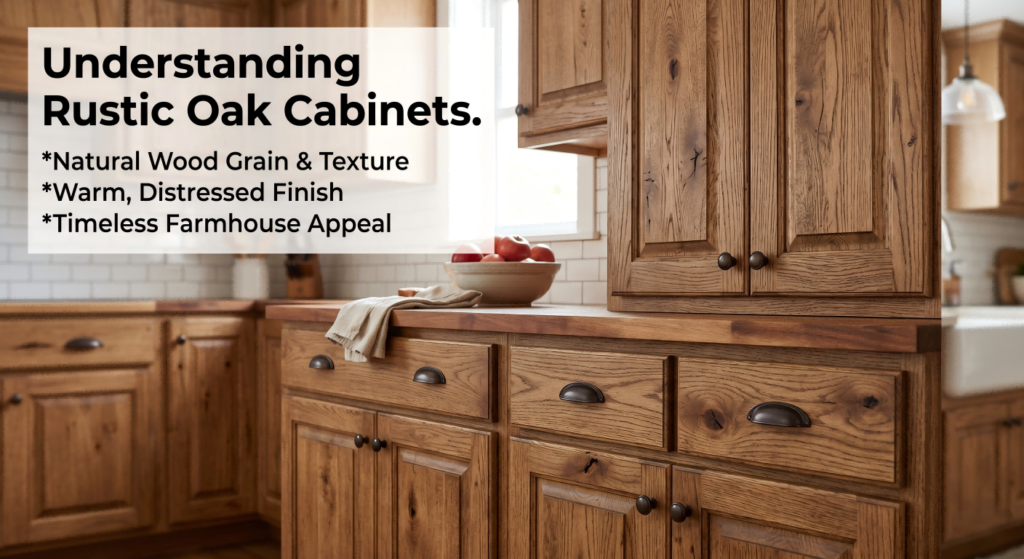
Rustic oak cabinets are made from oak wood graded to include natural character marks — prominent knots, open grain lines, sapwood color variation, and occasional mineral streaks. These imperfections aren’t flaws; they’re intentional features that give rustic oak its warm, organic, handcrafted identity.
Oak is a ring-porous hardwood with an exceptionally bold grain pattern. In rustic form, this grain becomes even more expressive. The natural color of rustic oak ranges from pale golden yellow to rich honey amber, with darker knots providing visual contrast. Over time, oak exposed to light naturally deepens and warms to a richer amber tone.
Rustic oak has long been associated with farmhouse kitchens, country-style homes, cottages, and Craftsman interiors — though modern design has embraced it in transitional and even contemporary spaces, particularly when combined with clean-line hardware and matte stone countertops.
What Are Dark Walnut Cabinets?
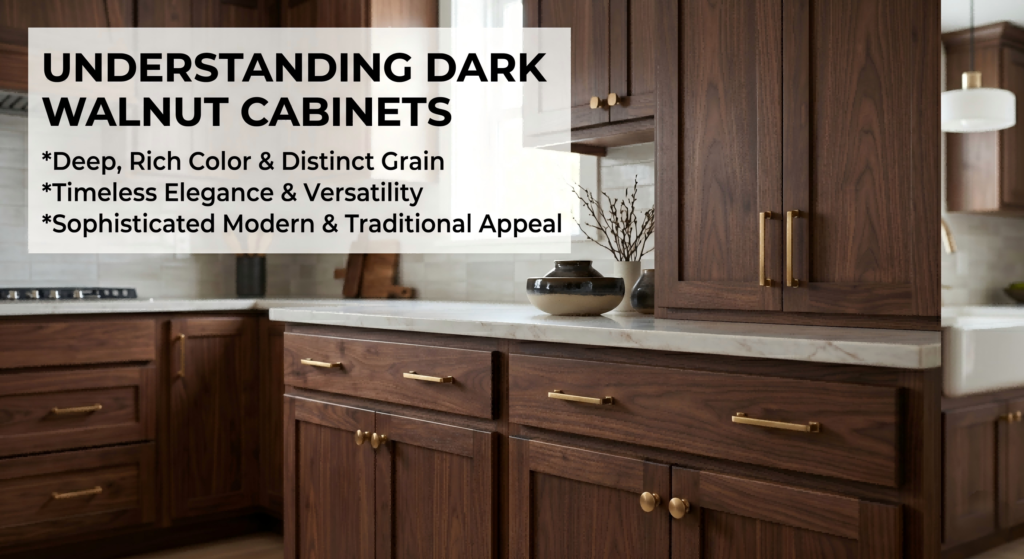
Dark walnut cabinets — typically made from American black walnut — are among the most prized wood choices in high-end kitchen design. Walnut’s natural color spans a rich spectrum from medium chocolate brown to near-black espresso, with occasional purple-gray undertones in fresh cuts that mellow to warmer tones over time.
Unlike rustic oak’s bold, attention-grabbing grain, walnut has a fine, straight-to-slightly-wavy grain that is more subtle and refined. The result is a surface that reads as smooth, uniform, and luxurious even without a heavy finish — the wood’s natural beauty does all the talking.
Dark walnut cabinets are at home in modern, contemporary, and transitional kitchens. They pair beautifully with light stone countertops, white or light-gray walls, and minimalist hardware. They’re also exceptionally popular in open-plan living spaces where the kitchen flows into living areas.
Color Comparison: Warm Honey vs. Deep Chocolate
Color is perhaps the single most important factor when choosing between rustic oak vs. dark walnut cabinets. These two woods couldn’t be more different in their base palette.
Rustic Oak: The Warm, Golden Palette
Rustic oak lives in the warm end of the color spectrum. Its natural tones range from light golden-cream to deep amber-honey, with the visual complexity of knots and grain adding depth across this warm range. When finished with an oil-based stain, the warmth intensifies further — golden oak, early American, and special walnut stains all enhance its natural character.
This warmth makes rustic oak enormously versatile in kitchen color schemes. It pairs naturally with:
- Cream, off-white, and warm white walls and upper cabinets
- Earth-tone tiles and backsplashes — terracotta, sage, soft greens
- Butcher block or natural stone countertops in beige and cream
- Wrought iron, aged bronze, or matte black hardware
- Warm wood flooring in similar tonal range
Dark Walnut: The Rich, Dramatic Palette
Dark walnut operates in an entirely different color world. Its deep chocolate and near-espresso tones create dramatic visual contrast against light elements — white countertops, pale walls, and light flooring. This contrast is intentional and powerful; dark walnut cabinets anchor a kitchen design with confident, luxurious presence.
Dark walnut pairs exceptionally well with:
- White or light gray quartz and marble countertops
- Pale gray, off-white, or greige walls
- Brushed gold, unlacquered brass, or matte black hardware
- Concrete or pale porcelain tile floors
- Stainless steel appliances
Which Color Works for Your Kitchen?
If your kitchen receives abundant natural light and you want it to feel warm, welcoming, and energetic, rustic oak is your natural ally. If you’re designing a bold, dramatic kitchen with high contrast and a luxury feel, dark walnut delivers what oak simply cannot.
Grain and Texture: Bold Character vs. Refined Elegance
The grain pattern of a cabinet wood dramatically affects how a finished kitchen looks and feels. In the rustic oak vs. dark walnut comparison, the grain difference is one of the starkest contrasts between the two species.
Rustic Oak Grain: Expressive and Bold
Oak has some of the most pronounced grain of any widely available hardwood. The medullary rays — natural ribbons of cells that run perpendicular to the growth rings — create distinctive ray fleck patterns, especially visible in quartersawn oak. Rustic oak amplifies this further with knots, grain variation, and open pores that give the wood real textural depth.
When you run your hand across a finished rustic oak cabinet, you can feel the grain. Under hardwax oil or a matte stain, the texture is tangible — you’re touching something real and alive. This tactile quality is a major part of rustic oak’s appeal.
Dark Walnut Grain: Subtle and Sophisticated
Walnut’s grain is considerably finer and more uniform than oak’s. It typically runs straight with occasional gentle waves or curls that add visual interest without becoming visually busy. There are no deep open pores and minimal ray fleck — the surface feels smoother and more refined even without heavy finishing.
This subtlety is exactly why dark walnut works so well in modern and contemporary kitchens. The grain provides visual texture without competing with other design elements. Walnut lets the overall composition breathe.
Grain Verdict
If you love wood that tells a story — that shows its age, history, and natural personality — rustic oak wins this category decisively. If you prefer wood that provides beautiful depth without demanding attention, dark walnut is your choice.
Rustic Oak vs. Dark Walnut Cabinets: Full Comparison at a Glance
| Factor | Rustic Oak | Dark Walnut |
| Color Tone | Honey, amber, golden warm tones | Deep chocolate, near-black richness |
| Grain Pattern | Prominent, bold open grain + knots | Fine, straight subtle grain |
| Hardness (Janka) | ~1,290 lbf — very hard | ~1,010 lbf — hard |
| Aesthetic Style | Farmhouse, rustic, country, cottage | Modern, contemporary, transitional |
| Cost Range | $ – $$ (more affordable) | $$$ – $$$$ (premium) |
| Finish Options | Stain, oil, paint, lacquer | Clear coat, oil, light stain |
| Ages Over Time | Deepens to rich amber/honey | Lightens slightly toward brown-gold |
| Resale Appeal | Broad mainstream appeal | Luxury/premium market appeal |
| Maintenance | Medium — needs sealing | Medium — oils recommended |
| Best Kitchen Type | Large, casual, family-oriented | Sleek, minimal, open-plan |
Durability and Hardness: Which Wood Holds Up Better in the Kitchen?
Kitchen cabinets face daily abuse: slammed doors, spilled liquids, steam from cooking, grease, and constant contact with hands. Durability matters enormously when comparing rustic oak vs. dark walnut cabinets for a working kitchen.
Rustic Oak Hardness
Red oak registers approximately 1,290 lbf on the Janka hardness scale, making it one of the harder domestic hardwoods available. White oak is even harder at around 1,360 lbf. This hardness translates to excellent resistance to denting and scratching in everyday kitchen use.
Oak’s density also makes it highly stable once properly dried and kiln-processed — it resists warping and movement better than softer woods like pine or alder. However, oak’s open grain means it can absorb moisture more readily than walnut if not properly sealed.
Dark Walnut Hardness
American black walnut scores approximately 1,010 lbf on the Janka scale — meaningfully softer than oak. This doesn’t make it a weak wood; walnut is still harder than many popular species. But in direct comparison, oak holds up better against physical impact.
What walnut lacks in hardness it compensates for in natural oils. Walnut has a higher natural oil content than oak, which gives it excellent inherent moisture resistance even without heavy finishing. This makes walnut particularly well-suited to humid kitchen environments.
Durability Verdict
For pure hardness and scratch resistance, rustic oak has the advantage. For natural moisture resistance without heavy finishing, dark walnut performs slightly better. In real-world kitchen environments, both woods are highly durable when properly finished and maintained — this difference is unlikely to be decisive for most homeowners.
Style Compatibility: Which Kitchen Designs Suit Each Wood?
Understanding which design styles each wood supports is critical when deciding between rustic oak vs. dark walnut cabinets. Choosing a wood that fights against your kitchen’s architecture and overall design language will always produce a disappointing result.
Rustic Oak Cabinets: Best Kitchen Styles
- Farmhouse Kitchen: The quintessential rustic oak environment. Apron-front sinks, shaker-style doors, open shelving, and natural stone or butcher-block countertops all complement rustic oak perfectly.
- Country and Cottage Kitchen: Informal, cozy, and character-rich — rustic oak thrives here with its natural imperfections front and center.
- Craftsman Kitchen: Rustic oak’s bold grain and warm tones align naturally with Arts and Crafts design principles of honest, beautiful materials.
- Modern Farmhouse: A growing design category where rustic oak lower cabinets are paired with painted uppers and clean-line elements for a fresh, updated take on the farmhouse aesthetic.
- Transitional Kitchen: Rustic oak can work in transitional spaces when paired with more refined hardware and clean geometric forms.
Dark Walnut Cabinets: Best Kitchen Styles
- Contemporary Kitchen: Dark walnut’s refined grain and rich depth feel entirely at home in sleek, minimal contemporary spaces with flat-front cabinetry.
- Modern Kitchen: Clean lines, integrated appliances, and dark walnut create a cohesive, sophisticated design statement.
- Mid-Century Modern Kitchen: Walnut was the defining wood of mid-century furniture design — it translates naturally into MCM kitchen spaces.
- Transitional Kitchen: Dark walnut bridges traditional and modern beautifully, especially in spaces that mix warm materials with clean architectural lines.
- Luxury and High-End Kitchen: Dark walnut’s premium price point and visual prestige make it the natural choice for high-budget kitchen renovations.
Cost Comparison: Rustic Oak vs. Dark Walnut Cabinets
Budget is a reality for nearly every kitchen renovation. Understanding the cost difference between rustic oak and dark walnut cabinets is essential for planning.
Rustic Oak Cabinet Costs
Rustic oak is one of the most cost-effective solid hardwood cabinet options available. Because rustic-grade oak intentionally includes lower-grade wood with natural character marks, it is priced considerably below select or premium-grade wood. For most markets in 2025, you can expect:
- Semi-custom rustic oak cabinets: $150 – $350 per linear foot installed
- Stock rustic oak cabinets (big box/manufacturer): $80 – $180 per linear foot
- Custom cabinet maker pricing: $400 – $700+ per linear foot depending on region
Dark Walnut Cabinet Costs
Dark walnut is a premium material that commands a significantly higher price point. American black walnut is less abundant than oak, slower growing, and in high demand from furniture makers and cabinet makers alike. Expect:
- Semi-custom dark walnut cabinets: $350 – $600 per linear foot installed
- Custom walnut cabinetry: $700 – $1,200+ per linear foot
- Walnut veneer options (more affordable): $200 – $400 per linear foot
Cost Verdict
Rustic oak is substantially more affordable than dark walnut for equivalent quality and coverage. For a typical 20-linear-foot kitchen, the price difference between rustic oak and solid walnut can easily be $5,000 – $15,000 or more. Budget-conscious renovators will find rustic oak offers extraordinary value for its visual impact.
That said, walnut veneer products can bring the price closer to mid-range oak while still delivering walnut’s stunning aesthetic. If dark walnut is your heart’s desire but budget is a constraint, explore walnut veneer on MDF core cabinets as a compelling middle ground.
How Each Wood Ages Over Time
One of the most underappreciated factors in the rustic oak vs. dark walnut cabinets comparison is how each wood changes with age. Both woods age beautifully — but in very different directions.
How Rustic Oak Ages
Fresh rustic oak starts with golden, pale honey tones that deepen and warm over years of exposure to light and air — a process called photoxidation. The amber richness of a 15-year-old oak kitchen is often considered more beautiful than the fresh-cut version. Knots darken slightly and deepen, while the overall patina becomes increasingly warm and characterful.
This natural aging process is considered a feature of rustic oak, not a flaw. It aligns with the wood’s authentic, lived-in aesthetic philosophy.
How Dark Walnut Ages
Walnut behaves in the opposite direction. Fresh dark walnut is at its darkest — deep chocolate with occasional purple-gray undertones. Over time, walnut lightens somewhat, moving toward a warmer medium-brown as the darker pigments fade with light exposure.
Many walnut owners are surprised by this lightening, but the result — a warm medium-brown with beautiful grain visible — is widely considered equally stunning in its matured form. If you love the near-black drama of fresh walnut, be aware the color will soften over years.
Aging Verdict
Both woods age gracefully and beautifully, just in opposite directions. Rustic oak gets warmer and richer. Dark walnut lightens to a more accessible, warm brown. Consider which direction of aging you’d find more satisfying over a 10-20 year relationship with your kitchen.

Resale Value and Buyer Appeal
If you’re renovating with an eye toward future resale value, the rustic oak vs. dark walnut cabinets question takes on an additional financial dimension.
Rustic oak has broad, mainstream appeal. It connects with a wide demographic of buyers — families, first-time homeowners, and anyone who gravitates toward warm, inviting kitchen aesthetics. In most U.S. housing markets, well-executed rustic oak kitchen cabinets add meaningful value without polarizing potential buyers.
Dark walnut appeals strongly to the luxury market segment. In high-end neighborhoods and premium properties, dark walnut cabinets signal quality and sophistication that buyers in that market actively seek out and are willing to pay for. In entry-level or mid-range markets, however, dark walnut’s premium price may not translate directly to proportional resale value.
The practical guidance: choose rustic oak if you’re optimizing for broad market appeal and ROI across different buyer profiles. Choose dark walnut if you’re in the luxury market and the kitchen is designed to be a statement feature for discerning buyers.
Maintenance Requirements: Rustic Oak vs. Dark Walnut
Maintaining Rustic Oak Cabinets
Rustic oak’s open grain requires attention to sealing to prevent moisture and oil absorption. Well-sealed rustic oak (with polyurethane, conversion varnish, or hardwax oil) is easy to maintain day-to-day with mild soap and water. The rustic aesthetic also means minor surface marks and small dents actually add to the character over time rather than detracting from it.
Key maintenance practices for rustic oak:
- Wipe spills immediately — open grain absorbs liquids faster than walnut
- Reapply hardwax oil every 1–3 years if using oil finish
- Clean with pH-neutral wood cleaner; avoid harsh chemical sprays near grain
- Inspect hinges and drawer glides annually; oak’s density can stress hardware
Maintaining Dark Walnut Cabinets
Dark walnut’s natural oil content gives it better inherent moisture resistance than oak. However, walnut’s dark color makes dust, fingerprints, and water spots more visible than on lighter wood surfaces. Daily wiping is important to keep walnut looking its best.
Key maintenance practices for dark walnut:
- Use microfiber cloths for daily dusting — dust shows on dark surfaces
- Apply walnut-specific wood oil annually to nourish and protect
- Avoid prolonged water contact on cabinet surfaces near the sink
- Touch up scratches promptly — on dark wood, scratches reveal lighter wood underneath
Maintenance Verdict
Rustic oak is slightly more forgiving in terms of visible wear — its natural imperfections mask minor damage. Dark walnut requires more diligent daily care to maintain its showroom appearance. Neither is particularly high-maintenance if properly finished and sealed.
Design Tips: Getting the Most From Each Wood
Maximizing Rustic Oak Cabinet Beauty
- Use matte or satin finishes to honor the wood’s natural texture — avoid gloss
- Pair with unlacquered brass or aged bronze hardware for a cohesive warmth
- Combine with open shelving to break up the wood visually and add airiness
- Use light countertops (white quartz, light stone) to balance the warm, rich tones
- Layer natural textiles — linen, cotton, jute — as window treatments and accessories
- Incorporate plants and greenery, which complement oak’s earthy warmth perfectly
Maximizing Dark Walnut Cabinet Beauty
- Maximize natural light — dark walnut absorbs light and can make small kitchens feel heavy
- Use light-colored countertops (white marble, pale quartz) to create striking contrast
- Keep upper cabinets light-colored or open to prevent the room feeling closed in
- Choose hardware in brushed gold or matte brass to warm up the cool, dark tones
- Use under-cabinet lighting — it dramatically enhances walnut’s grain and richness
- In open-plan spaces, let the walnut cabinets serve as the visual anchor for the whole area
Frequently Asked Questions: Rustic Oak vs. Dark Walnut Cabinets
Is dark walnut more expensive than rustic oak for kitchen cabinets?
Yes, significantly so. Dark walnut commands a premium price that is typically 2–3 times higher than comparable rustic oak cabinetry. For a full kitchen, the difference can range from $5,000 to $20,000+ depending on kitchen size, cabinet quality level, and region. Walnut veneer products can narrow this gap considerably.
Which wood is better for a small kitchen — rustic oak or dark walnut?
Rustic oak is generally the better choice for small kitchens. Its warm, lighter tones reflect more light and keep the space feeling open and airy. Dark walnut’s deep tones can make a small kitchen feel cramped and heavy. If you love walnut but have a small kitchen, consider using it only on lower cabinets while keeping upper cabinets painted or light wood.
Can you mix rustic oak and dark walnut in the same kitchen?
Yes — mixed wood kitchens are a popular design trend. A common and effective approach is rustic oak lower cabinets paired with walnut floating shelves or a walnut island. This creates visual interest and allows you to enjoy both woods while keeping the overall design cohesive. The key is to ensure the other design elements (countertop, hardware, flooring) bridge the two wood tones harmoniously.
Which wood holds up better to everyday kitchen use?
Rustic oak has a slight edge in hardness (Janka 1,290 vs. 1,010 for walnut), making it marginally more resistant to denting and scratching. However, both are highly durable hardwoods well-suited to kitchen environments. With proper finishing and routine care, either will last decades.
Does rustic oak look outdated compared to dark walnut?
Absolutely not. Rustic oak has experienced a major design renaissance in recent years, driven by the farmhouse, organic modern, and Japandi design movements. When executed thoughtfully — with the right finishes, hardware, and surrounding design elements — rustic oak cabinets look as current and intentional as any other wood choice. Dark walnut is arguably trendier at the moment in high-end kitchen design, but trends shift; rustic oak’s warmth and character give it timeless staying power.
The Final Verdict: Rustic Oak vs. Dark Walnut Cabinets — Which Is Right for You?
After examining every dimension of the rustic oak vs. dark walnut cabinets comparison, here is how to make your final decision:
Choose Rustic Oak Kitchen Cabinets If You:
- Love warm, golden, honey tones that feel welcoming and familiar
- Are designing a farmhouse, country, cottage, or Craftsman-style kitchen
- Have a moderate to mid-range budget and want maximum visual impact per dollar
- Prefer a wood that shows natural imperfections as a design feature
- Want broad buyer appeal for potential future resale
- Are working with a smaller kitchen where lighter tones will keep the space open
- Appreciate a wood that gets richer and more beautiful with age
Choose Dark Walnut Kitchen Cabinets If You:
- Are drawn to deep, rich, chocolate-espresso tones with sophisticated presence
- Are designing a modern, contemporary, transitional, or MCM kitchen
- Have a higher budget and want a premium, luxury-market finish
- Prefer subtle, refined grain that lets the color do the talking
- Have a large, well-lit kitchen where the depth of walnut won’t feel heavy
- Are targeting high-end buyers in a luxury property market
- Love a wood that starts bold and mellows to a beautiful warm brown over time
The honest truth: there is no wrong answer in the rustic oak vs. dark walnut cabinets debate. Both woods are exceptional. Both create stunning kitchens. The decision comes down to your personal aesthetic, your kitchen’s architecture, your lifestyle, and your budget.
What matters most is choosing the wood that makes you feel something when you walk into the kitchen — the one that makes you smile every morning when you reach for your coffee mug. That’s the wood that’s right for you.