You’ve found a stunning WPC wall panel design online. The photos look incredible — rich wood grain texture, flawless surface finish, exactly what your project needs. You reach out to the supplier. Weeks pass. Then the samples arrive looking nothing like the listing. Or worse: your full bulk order arrives and a third of the panels are warped, discolored, or simply fail the promised specification. Sound familiar? In an industry flooded with middlemen, trading companies, and factories of wildly varying quality, choosing the right WPC wall panel manufacturer is one of the most critical — and most underestimated — decisions your business will ever make. Get it right, and you gain a competitive advantage that fuels your growth for years. Get it wrong, and the financial and reputational cost can be devastating.
Quick Answer
To choose the best WPC wall panel manufacturer, evaluate seven core criteria: verified production capacity, international quality certifications (CE, ISO, SGS), raw material transparency, OEM/customization capability, a structured sample testing process, proven export experience, and strong after-sales communication. Factory-direct suppliers in China with at least five years of export history, third-party-tested products, and dedicated export teams consistently deliver the best balance of quality, pricing, and reliability. Always request and physically test samples before committing to any bulk order.
1. What Exactly Is a WPC Wall Panel? (And Why It Matters for Sourcing)
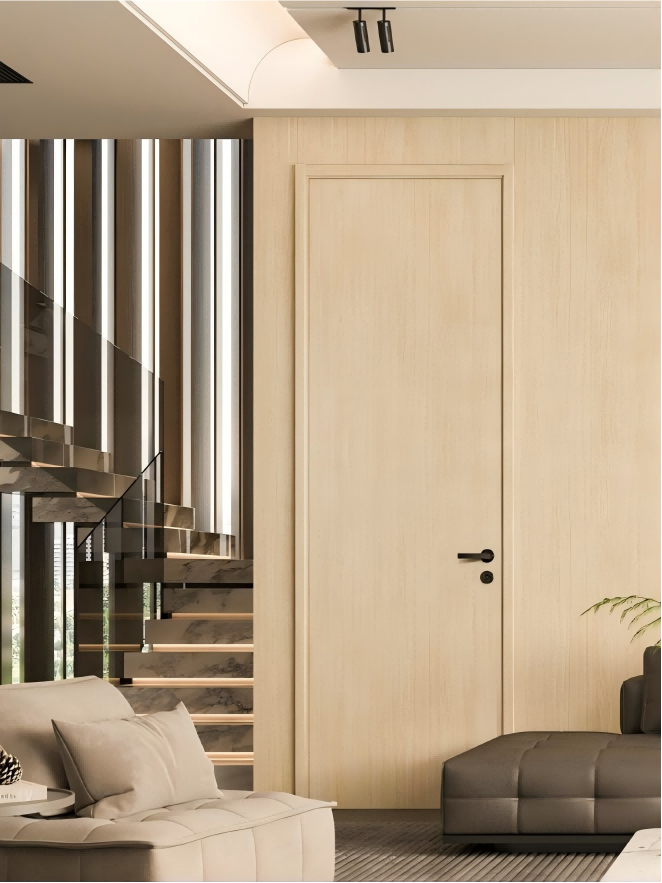
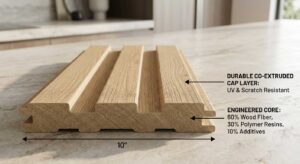
Before evaluating suppliers, it helps to understand exactly what you are buying. WPC stands for Wood Plastic Composite — an engineered material that combines natural wood or bamboo fiber with polymer resins (typically PVC or PE), creating a product that delivers the warmth and aesthetics of real wood with dramatically superior performance in moisture, UV, and high-traffic environments.
WPC wall panels are used across a wide range of high-value applications:
- Interior feature walls, accent walls, and full-room cladding
- Hotel lobbies, office spaces, retail stores, and restaurants
- Bathroom and kitchen walls (waterproof performance required)
- Exterior building façades and outdoor cladding
- Residential living rooms, bedrooms, and corridors
Their commercial appeal lies in a unique combination of properties: fully waterproof, formaldehyde-free, termite-resistant, dimensionally stable, UV-resistant, and dramatically faster to install than ceramic tile or traditional timber cladding.
The global WPC market is growing rapidly, projected to exceed USD 10 billion by 2027, driven by accelerating demand for sustainable, low-maintenance building materials. China currently accounts for over 60% of global WPC panel exports — making it the world’s undisputed manufacturing hub. The key question for any serious buyer is not whether to source from China, but which Chinese WPC wall panel manufacturer to choose.
2. Why Choosing the Right Manufacturer Is Your Most Important Decision
Let’s be direct: the wrong WPC wall panel manufacturer will cost you far more than you save on unit price. Here is what is genuinely at stake:
| Risk Category | Potential Consequence |
| Quality Failure | Warped, faded, or delaminating panels. Costly returns, rework, and project delays that erase your margin. |
| Reputation Damage | Your clients judge your quality — not the factory’s. One failed installation ends a client relationship. |
| Supply Disruption | Unreliable factories miss deadlines, change specifications without notice, or disappear under pressure. |
| Compliance Risk | Non-certified panels in markets like the EU, US, or Australia can trigger regulatory penalties and liability. |
| Financial Exposure | Substandard panels discovered post-installation mean you absorb replacement costs with no recourse. |
Conversely, the right WPC wall panel manufacturer becomes a genuine competitive advantage — delivering consistent quality, flexible customization, competitive pricing, and reliable delivery that enables you to win more contracts, build a stronger brand, and serve your clients at a higher level.
3. The 7 Key Criteria to Evaluate a WPC Wall Panel Manufacturer
Use this professional framework as your evaluation checklist before signing any purchase order.
3.1 Production Capacity and Factory Scale
A legitimate manufacturer will have verifiable, substantial production infrastructure. In your evaluation, look for:
- Multiple extrusion lines: A credible mid-to-large WPC factory operates 5 to 20+ production lines. Fewer than 3 suggests limited scale.
- Annual output in thousands of tons: Production measured only in hundreds of tons indicates a small-scale, potentially unreliable operation.
- In-house quality control laboratory: On-site testing equipment for density, bending strength, dimensional accuracy, and surface hardness.
- Dedicated warehousing: Adequate finished goods and raw material storage prevents production bottlenecks affecting your lead time.
Ask directly: “What is your annual production capacity for WPC wall panels, and how many extrusion lines do you operate?” Vague answers — or answers that deflect to ‘depends on the product’ — are a warning signal. Professional manufacturers know their numbers.
3.2 Quality Certifications — Non-Negotiable
Certifications are not marketing checkboxes. They are independent, verifiable proof that the manufacturer’s products and processes meet internationally recognized standards. Here is what to require:
- ISO 9001: Confirms a documented, audited quality management system is in place throughout production.
- CE Marking: Required for products sold in the European Economic Area. Covers safety, performance, and environmental compliance.
- SGS / Intertek / TÜV Reports: Third-party lab results verifying formaldehyde emission (E0/E1 standard), fire rating (B1 or Class A), bending strength, and dimensional tolerance.
- FSC Certification: Confirms responsibly sourced wood fiber — increasingly required for LEED green building compliance and ESG-focused clients.
- REACH Compliance: Critical for European markets, confirming the product contains no restricted hazardous substances.
Critical step: Always request the actual test reports — not just certificate images. Verify the report number directly on the issuing laboratory’s official website. Expired certificates, certificates covering different products, or certificates with matching names but different factory addresses are all red flags.
3.3 OEM/ODM Capability and Product Customization
The best WPC wall panel manufacturers offer genuine flexibility beyond a fixed catalog. Evaluate whether the supplier can deliver:
- Custom panel profiles and sizes (beyond standard extrusion dies)
- Custom color formulations and surface textures (wood grain, stone, matte, high gloss, brushed)
- Co-extrusion capability — bonding a protective cap layer to the core during production for superior UV and scratch resistance
- Private label and OEM packaging — custom brand logo, label design, and product catalog
- Proprietary design collaboration — R&D support for developing new profiles specific to your market
OEM capability signals both technical depth and production flexibility. For distributors building a private label brand, this is not a nice-to-have — it is a baseline requirement.
3.4 Raw Material Quality and Transparency
WPC panels are only as good as their ingredients. Premium manufacturers will be transparent about their material choices; lower-quality suppliers will be evasive. Key questions to probe:
- Wood/bamboo fiber: Is it professionally dried to appropriate moisture content? High moisture leads to bubbling, warping, and dimensional instability over time.
- Polymer resin type: PVC-based WPC is typically more rigid and weather-resistant. PE-based is more flexible. Understand which is used and why it suits your application.
- Additive package: UV stabilizers, impact modifiers, lubricants, and colorants dramatically affect long-term performance. Budget factories cut here first — resulting in panels that fade, crack, or become brittle within 2 to 3 years.
- Co-extrusion cap layer: Advanced panels bond a performance cap to the core. Ask whether co-extrusion is standard or an upgrade — and get samples to test the difference.
3.5 Sample Testing Process
Never place a bulk order without thorough sample evaluation. A professional manufacturer has a clear, structured sample policy:
- Standard samples (existing designs): available within 3 to 5 business days
- Custom samples (new profiles or colors): 15 to 25 business days depending on complexity
- Samples shipped with a full technical specification sheet covering dimensions, weight, density, and surface treatment
When your samples arrive, run these tests systematically:
- Visual inspection: Color consistency, surface uniformity, edge quality, and finish accuracy vs. the specification
- Dimensional accuracy: Measure length, width, and thickness; compare against the spec sheet tolerances
- Water immersion (24 hours): A premium panel shows minimal swelling and no color change
- Scratch resistance: Use a key to test surface hardness — the co-extruded cap layer should resist light abrasion
- Installation test: Actually install a few panels to verify the locking or groove system works smoothly
- UV exposure: Place samples in direct sunlight for 2 to 4 weeks; check for fading or surface chalking
3.6 Export Experience and Logistics Support
A great factory that cannot navigate international shipping reliably is a liability. Evaluate their logistics capability carefully:
- Export track record: Which countries have they shipped to? Evidence of exports to the EU, US, Australia, or the Middle East signals ability to meet high compliance standards.
- Freight knowledge: A professional export team understands Incoterms (FOB, CIF, DAP), required documentation (commercial invoice, packing list, bill of lading, certificate of origin), and fumigation requirements for wood-fiber products.
- Packaging standards: Panels must survive ocean freight. Professional export packaging includes PE film wrapping, palletizing, corner reinforcement, and moisture-barrier wrapping.
- Port proximity: Factories near Shanghai, Ningbo, Shenzhen, or Guangzhou offer faster, more cost-effective shipping to most global markets.
3.7 Communication Quality and After-Sales Service
This criterion is consistently underweighted by buyers — yet it predicts supplier reliability more accurately than almost any other factor.
- English proficiency: Your dedicated account manager should communicate clearly, respond promptly, and write with technical accuracy. Delays in communication reliably predict delays in production.
- Pre-sales technical support: A credible manufacturer offers expert guidance: helping you select the right panel profile, advising on installation systems, and providing CAD drawings or specification sheets on request.
- After-sales claims policy: Ask directly: ‘What is your process if panels arrive damaged or defective?’ A professional manufacturer has a written claim policy with defined timelines and remedies.
- Responsiveness test: Send a detailed technical inquiry. The quality and speed of the response tells you exactly how they will behave when a problem arises during your order.
4. Red Flags — Warning Signs to Walk Away Immediately
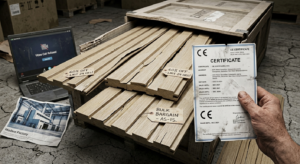
As important as knowing what to look for is recognizing what to avoid. Here are the most common warning signs that a WPC wall panel supplier is not a trustworthy manufacturing partner:
- Refuses a factory video call or provides only stock photos. Legitimate manufacturers are proud of their facilities. Reluctance to show real production evidence almost always signals a trading company misrepresenting itself as a factory.
- Pricing dramatically below market average. WPC panel pricing is relatively transparent. A quote 40 to 60% below the market average means corners are being cut on raw materials, additives, or quality control — and those cuts show up in your client’s installation.
- Vague, unverifiable, or expired certifications. Certificates that cannot be verified on the issuing body’s website, cover different products, or are beyond their valid date are worthless for regulatory compliance.
- No sample policy or charges excessive fees for samples. Professional manufacturers provide samples readily. A supplier who only shows digital renders or catalog images without offering physical samples is not ready to serve serious buyers.
- Pressure tactics and artificial urgency. ‘This price expires in 24 hours’ or ‘Stock is nearly gone’ are manipulation techniques — not signs of a healthy, professional supplier relationship.
- No defined after-sales process. If asking about defect and claims policy produces a vague or defensive response, you have no protection after payment clears.
- Unable to discuss raw materials technically. A genuine WPC manufacturer can articulate exactly what resin they use, how their fiber is processed, and what additive package they apply. A trading company typically cannot answer these questions.
5. The Essential Supplier Questionnaire — 12 Questions to Ask
Use this checklist in your initial inquiry or supplier evaluation call. The answers — and the quality of those answers — will rapidly separate professional manufacturers from unqualified suppliers.
- How long have you been manufacturing WPC wall panels specifically, and what markets do you currently serve?
- What is your annual production capacity, and how many extrusion lines do you operate?
- Can you share your current ISO 9001, CE, SGS, and formaldehyde test reports for WPC wall panels?
- What polymer resin and fiber types do you use, and what additive brands do you source?
- Do you offer co-extruded WPC wall panels as a standard product, and can I see the test comparison vs. non-co-extruded panels?
- What is your sample lead time for standard products and for custom profiles or colors?
- What is your minimum order quantity for standard products and for OEM/custom orders?
- Which countries have you shipped to in the past 12 months, and can you provide export references?
- Which port do you ship from, and can you provide both FOB and CIF pricing?
- What is your defect rate target, and what is your written process for handling damaged or non-conforming goods?
- What is your payment term structure — deposit, balance, and accepted payment methods?
- Can you share case studies, client references, or project examples in markets similar to mine?
These questions will eliminate unqualified suppliers within the first exchange — and position you as a serious, professional buyer, which is exactly how the best manufacturers want to be engaged.
6. Why China Dominates Global WPC Wall Panel Manufacturing
China’s leadership in WPC wall panel production is not accidental. It is the result of strategic, decades-long investment across the entire value chain:
- Raw material access: Abundant domestic supplies of wood fiber, bamboo fiber, and high-quality PVC and PE resins give Chinese manufacturers inherent cost advantages at the input level.
- Advanced production equipment: China-based extrusion machinery manufacturers have developed highly specialized WPC production lines now exported globally — meaning Chinese factories often operate the industry’s most advanced available technology.
- Deep technical expertise: Over 20 years of WPC manufacturing history has produced a deep workforce of specialized engineers, technicians, color scientists, and surface finishing experts.
- Complete vertical supply chain: From resin compounding and fiber processing to co-extrusion, UV surface coating, custom color matching, and profile design — the entire value chain operates within China’s manufacturing clusters, compressing lead times and simplifying quality control.
- World-class export infrastructure: Direct access to the world’s highest-volume container shipping ports — Shanghai, Ningbo, Shenzhen — enables cost-effective, reliable global delivery to virtually any market.
- Competitive innovation: Intense domestic competition among WPC manufacturers drives continuous investment in product innovation, surface technology, and production efficiency that benefits global buyers.
7. Why ME Building Solution Is the Right Manufacturing Partner
At ME Building Solution, we are not a trading company. We are a vertically integrated, factory-direct WPC wall panel manufacturer with full control over our production — from raw material selection and compounding through extrusion, surface treatment, quality inspection, and export packaging.
| Our Capability | What It Means for Your Business |
| Factory-Direct Pricing | No middleman markup. You access wholesale factory pricing while maintaining the quality standards your clients demand. |
| Full Certifications | CE, ISO 9001, SGS test reports, E0 formaldehyde grade. Ready for EU, US, Middle East, and Australian markets. |
| True OEM/ODM Service | Custom profiles, sizes, color formulations, and private label packaging. We manufacture your vision, not just our catalog. |
| Co-Extrusion Technology | Our premium WPC wall panels feature co-extruded protective cap layers for superior UV stability, scratch resistance, and color durability. |
| Proven Export Track Record | We have shipped to buyers in Europe, North America, the Middle East, Southeast Asia, and Australia with consistent reliability. |
| Dedicated Account Management | From the moment you inquire, you work with a single, responsive account manager who owns your project through delivery. |
We welcome factory visits and video audits. We believe trust is built through transparency — and we are proud to show you exactly how our products are made, what materials we use, and how we maintain the quality standards that protect your business and your clients.
8. Conclusion — Choose Quality, Choose a Partner, Not Just a Supplier
Choosing the best WPC wall panel manufacturer is ultimately not about finding the lowest unit price. It is about identifying the right long-term partner — one who combines technical excellence, production integrity, international compliance, and a genuine commitment to your project’s success.
The seven criteria outlined in this guide give you a reliable, professional framework to evaluate any manufacturer you engage. Apply them consistently and you will dramatically reduce your sourcing risk, protect your client relationships, and build a supply chain that strengthens your business over time.
| Ready to Source the Best WPC Wall Panels? Tell us about your project requirements — panel type, quantity, application, and target market. We will respond within 24 hours with our product catalog, certifications, and a factory-direct quotation. Contact Us Now at mebuildingsolution.com Get Free Samples | Request a Quote | Download Product Catalog |
Frequently Asked Questions
Q: What is the typical lead time for WPC wall panels from a China manufacturer?
A: Standard products typically ship within 15 to 25 business days after order confirmation and deposit receipt. Custom or OEM orders may require 25 to 45 business days depending on the complexity of the design and the quantity ordered. Your manufacturer should provide a production schedule in writing before you confirm the order.
Q: What is the minimum order quantity for WPC wall panels?
A: MOQs vary by manufacturer. Most credible factories require a minimum of 300 to 500 square meters for standard products and 500 to 1,000 square meters for custom colors or profiles. Some larger factories may require higher MOQs for OEM orders. Always confirm in writing before price negotiation begins.
Q: Are WPC wall panels safe for interior use in residential environments?
A: Premium WPC wall panels from certified manufacturers are formaldehyde-free (E0 emission grade), non-toxic, and fully safe for all interior applications — including bedrooms, children’s rooms, and public spaces. Always request and verify the formaldehyde test report (E0 or E1 certification) before purchasing.
Q: Can WPC wall panels be used in high-humidity environments like bathrooms?
A: Yes. WPC wall panels are specifically engineered for moisture resistance. They do not rot, warp, or support mold growth when properly installed and sealed at joints. This makes them an ideal choice for bathrooms, kitchen splashbacks, spa areas, indoor pools, and exterior cladding applications.
Q: How do I verify if a WPC supplier is a factory or a trading company?
A: Request their business license and verify the registered business scope includes manufacturing. Ask for a live video call showing the production floor — a factory will never refuse this. Probe raw material and production process details in technical depth; genuine manufacturers can discuss these confidently, while trading companies typically deflect or provide vague answers.
Q: What certifications should I require for WPC panels sold in the European market?
A: For the European market, require CE marking, an EN-compliant fire rating test (typically B-s1,d0 or better), formaldehyde emission class E1 or E0, REACH compliance, and if applicable, FSC certification for wood fiber sourcing. Your manufacturer should be able to provide all of these documents from recognized third-party testing bodies.