Table of Contents
When it comes to designing a kitchen that feels warm, timeless, and full of character, few materials rival rustic oak. Its bold grain patterns, rich natural tones, and aged texture make it one of the most sought-after choices for kitchen cabinetry. But here’s the question most homeowners face once they’ve fallen in love with those beautiful wood panels: what finish should you choose for rustic oak kitchen cabinets?
The finish you select doesn’t just affect how your cabinets look — it determines how they feel underfoot, how easy they are to clean, how long they’ll last, and how well they complement the rest of your kitchen design. A wrong choice can dull the natural beauty of the wood, while the right one can amplify every stunning grain line and knot.
In this comprehensive guide, we’ll walk you through every major finish option available for rustic oak kitchen cabinets — from oil-based stains and wax coatings to matte lacquers and painted finishes — so you can make the most informed decision for your kitchen renovation.
Why the Right Finish Matters for Rustic Oak Kitchen Cabinets
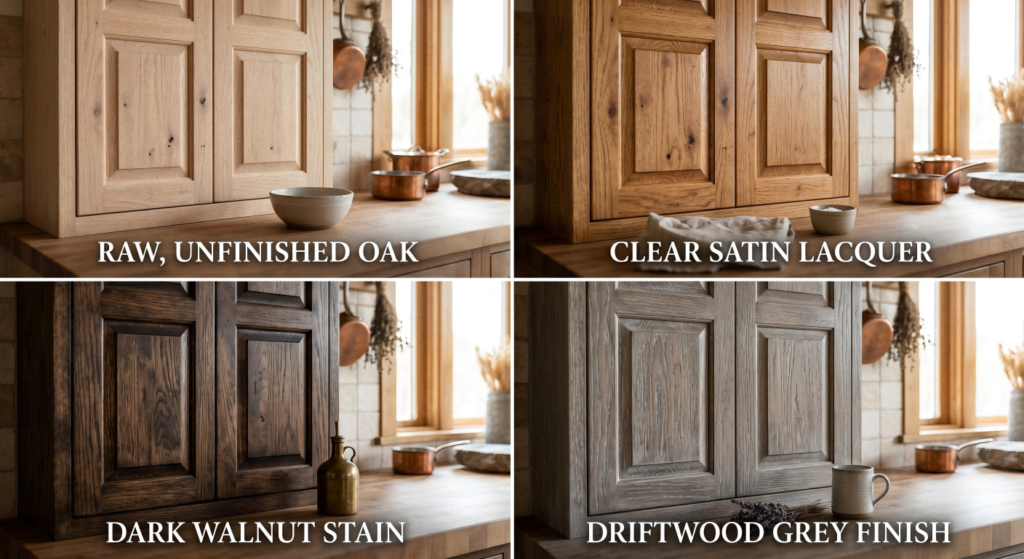
Rustic oak kitchen cabinets are defined by their natural imperfections — rough-sawn edges, visible knots, open grain, and variations in color. These qualities are exactly what makes them special. The finish you apply either preserves and enhances these traits or obscures them.
Beyond aesthetics, the finish plays a critical protective role. Kitchen cabinets are exposed daily to heat, steam, cooking grease, water splashes, and constant handling. Without the right protective coating, even the most durable oak wood will absorb moisture, swell, crack, and stain over time.
Here are the key factors the finish influences:
- Durability: How resistant your cabinets are to scratches, stains, and moisture damage
- Appearance: Whether the wood grain is highlighted, muted, or completely covered
- Maintenance: How easy the surface is to clean and how often it needs re-coating
- Style Compatibility: How well the finish pairs with your overall kitchen aesthetic
- Cost: Both upfront material costs and long-term maintenance expenses
Understanding the Character of Rustic Oak Before Choosing a Finish
Before diving into finish options, it helps to understand what makes rustic oak different from standard cabinet-grade wood. Rustic oak is typically graded lower than select or clear oak, meaning it intentionally includes more natural character marks: knots, mineral streaks, sapwood variation, and open pores.
Oak in general is a ring-porous hardwood with very pronounced grain lines. This open grain structure means it absorbs finishes differently than closed-grain woods like maple or cherry. The pores in oak can actually trap finish unevenly if not properly prepared, which is why surface preparation — sanding, grain filling, and priming where needed — is just as important as the finish product itself.
The golden and honey tones of fresh oak will naturally amber and deepen over time regardless of finish. However, the type of finish you choose significantly influences how this aging process looks — from graceful patina to uneven discoloration.
Oil-Based Stains: The Classic Choice for Rustic Oak Kitchen Cabinets
Oil-based stains are perhaps the most popular finishing option for rustic oak kitchen cabinets, and for good reason. They penetrate deep into the wood’s open grain, enhancing the natural patterns of rustic oak while adding rich depth and warmth.
Best Color Stains for Rustic Oak
- Early American: A warm medium-brown that deepens oak’s natural honey tones without darkening too dramatically
- Golden Oak: Intensifies the natural gold and amber hues already present in the wood
- Dark Walnut: Creates a rich, sophisticated look that contrasts beautifully with lighter kitchen elements
- Jacobean: A deep espresso-brown that gives rustic oak a moody, dramatic appearance
- Special Walnut: A versatile mid-tone that sits between golden and dark walnut — very popular for farmhouse kitchens
After staining, rustic oak cabinets should always be top-coated with a protective sealant such as polyurethane, conversion varnish, or lacquer. Stain alone provides no significant protection against moisture or abrasion.
Pros: Excellent grain enhancement, wide color range, natural look. Cons: Requires top coat, longer drying time, harder to apply evenly.
Natural Oil Finishes: Hardwax Oil and Danish Oil
Natural oil finishes — including hardwax oil, Danish oil, linseed oil, and tung oil — soak into the wood rather than forming a surface film. This produces a beautifully matte, hand-rubbed look that feels organic and warm, making it an ideal finish for rustic oak kitchen cabinets that are meant to look authentically aged and lived-in.
Hardwax oil products — such as Osmo Polyx or Rubio Monocoat — are particularly excellent for kitchen environments. They combine natural oils with hard waxes to create a surface that resists moisture and staining better than pure oil alone. Unlike lacquers or varnishes, damaged areas can be spot-repaired without stripping the entire cabinet.
The look and feel of hardwax oil on rustic oak is unmatched for homeowners who want a natural, matte finish that celebrates the wood’s texture. You can literally feel the grain under your hand — there’s no plastic-film sensation.
Pros: Natural matte appearance, easy spot repair, breathable, food-safe options available. Cons: Requires periodic re-oiling (every 1–3 years), less water-resistant than lacquer.
Polyurethane: The Most Durable Topcoat for Kitchen Cabinets
Polyurethane is one of the most widely used protective topcoats for wood cabinets, and it offers outstanding durability in high-traffic kitchen environments. Available in water-based and oil-based formulas, as well as gloss, semi-gloss, satin, and matte sheens, polyurethane gives you extensive control over the final look of your rustic oak kitchen cabinets.
Choosing the Right Sheen for Rustic Oak:
- Matte Polyurethane: Best for rustic oak — minimizes light reflection and preserves the raw, organic look of the wood
- Satin Polyurethane: A slight sheen that adds warmth without being overly glossy; the most popular choice overall
- Semi-Gloss: Easier to clean, but the sheen can clash with the rough, informal nature of rustic oak
- High Gloss: Generally not recommended for rustic oak — the contrast between shiny surface and rough wood can look mismatched
Water-based polyurethane is preferred for its low odor, fast drying time, and clarity (it doesn’t yellow over time). Oil-based polyurethane adds a warm amber tone that can beautifully complement rustic oak’s natural golden hues, but it takes longer to dry and requires better ventilation.
Pros: Excellent durability, wide sheen range, moisture and scratch resistant. Cons: Can look plastic if over-applied, oil-based yellows over time.
Conversion Varnish: The Professional-Grade Finish
Conversion varnish (also called catalyzed or CV lacquer) is the gold standard finish used by professional cabinet makers. It’s a two-component system that undergoes a chemical hardening process, producing an exceptionally hard, durable, and moisture-resistant surface.
For rustic oak kitchen cabinets, conversion varnish applied in a satin or matte sheen produces a professional result that protects the wood’s surface far better than standard polyurethane while maintaining a natural appearance. It’s particularly recommended for busy households where the kitchen sees heavy daily use.
Pros: Extremely hard and durable, chemical resistant, professional finish quality. Cons: Requires spray application (not DIY-friendly), more expensive, must be applied in ventilated environment.
Wax Finishes: Traditional Beauty for Rustic Cabinets
Wax is one of the oldest wood finishing techniques and remains a favorite for rustic and farmhouse-style cabinetry. When applied over bare or stained rustic oak, paste wax creates a low-luster, silky-smooth surface with a distinctly handcrafted quality.
Wax is not a protective finish by modern kitchen standards — it offers minimal resistance to water and heat compared to lacquers or polyurethane. However, when used as a topcoat over a chalk-painted or milk-painted cabinet, or applied to accent areas of a rustic kitchen, it delivers an authentic aged character that synthetic finishes simply cannot replicate.
Pros: Beautiful natural sheen, easy to apply, imparts authentic rustic character. Cons: Low durability in kitchen environments, requires frequent reapplication, not water-resistant.
Painted Finishes on Rustic Oak: A Modern Twist
While painting over rustic oak kitchen cabinets might seem counterintuitive — why cover that beautiful grain? — it’s actually a growing trend in modern farmhouse and transitional kitchen design. Painting allows you to introduce bold or soft color while still benefiting from the structural quality and durability of solid oak.
Popular paint finishes for rustic oak cabinets include:
- Chalk Paint: Creates a soft, matte, vintage appearance with minimal prep — ideal for ultra-rustic looks
- Milk Paint: A more workable, slightly transparent option that allows some grain to show through
- Cabinet-Grade Latex Paint: Durable semi-gloss or satin latex designed for high-traffic surfaces
- Two-Part Water-Based Enamel: A professional-grade, hard-drying paint with excellent chip resistance
When painting rustic oak, be aware that the open grain of oak creates a textured surface. Many painters apply a grain filler before painting to achieve a smoother finish. However, leaving the grain visible under a painted finish creates a beautiful tactile quality that many homeowners prefer.
Best paint colors for rustic oak kitchen cabinets in 2025:
- Sage Green — earthy, botanical, pairs beautifully with wood tones
- Off-White / Cream — classic farmhouse palette, timeless and bright
- Navy Blue — dramatic contrast, popular in kitchen islands
- Charcoal Gray — sophisticated and moody, works well with brass hardware
- Terracotta — warm and earthy, on-trend for rustic and Mediterranean kitchens
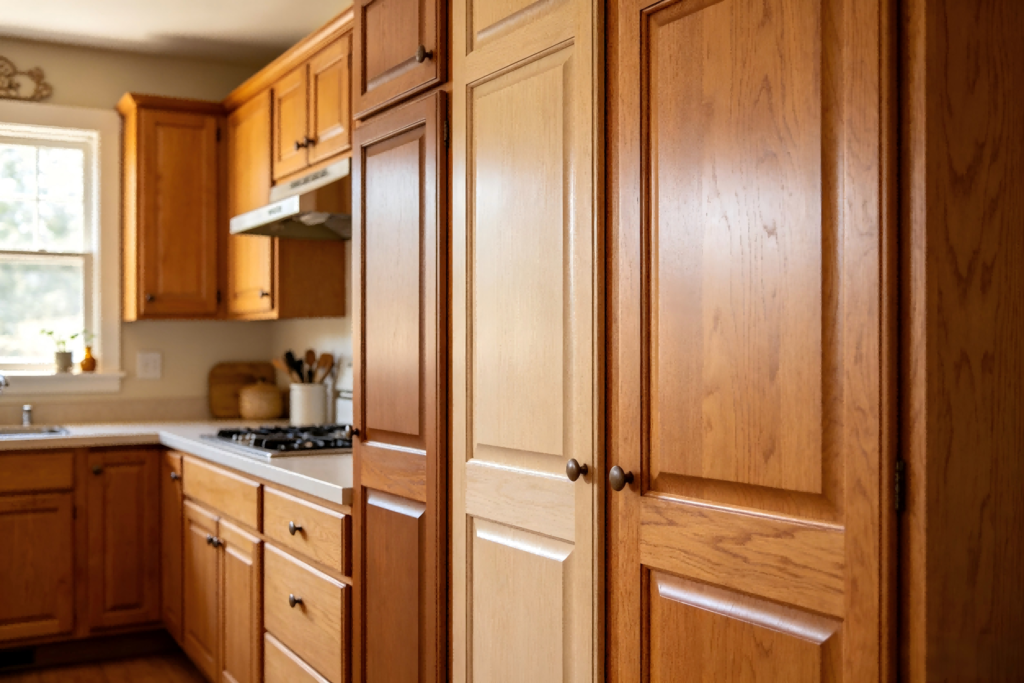
Finish Comparison: Rustic Oak Kitchen Cabinets at a Glance
| Finish Type | Durability | Appearance | Maintenance | Best For |
| Oil-Based Stain + Topcoat | High | Natural/Warm | Low | Traditional kitchens |
| Hardwax Oil | Medium-High | Matte/Natural | Medium | Organic/Farmhouse |
| Polyurethane | Very High | Variable sheen | Low | Heavy-use kitchens |
| Conversion Varnish | Excellent | Professional | Very Low | Pro/custom build |
| Wax | Low | Soft/Vintage | High | Accent/low-use areas |
| Paint + Primer | High | Opaque/Color | Low | Modern Farmhouse |
How to Choose the Best Finish for Your Rustic Oak Kitchen Cabinets
With so many options available, how do you choose? The answer comes down to four key considerations:
1. Your Kitchen’s Style and Mood
For a classic farmhouse or cottage kitchen, hardwax oil or an oil-based stain in a warm amber or walnut tone will feel most authentic. For a modern farmhouse that mixes rustic and clean elements, a painted finish in sage green or off-white with matte polyurethane topcoat delivers both character and style. For a high-end, custom kitchen, a professional conversion varnish in satin is hard to beat.
2. Your Lifestyle and How You Use Your Kitchen
Busy families who cook daily need maximum durability. In this case, polyurethane or conversion varnish is your best bet. If you’re a couple or empty-nester who cooks occasionally and values aesthetics over hardwearing performance, the natural beauty of hardwax oil may be perfect.
3. DIY vs. Professional Application
Oil-based stains, hardwax oils, and polyurethane are manageable for skilled DIYers. Conversion varnish and spray lacquers require professional spray equipment and are best left to cabinetmakers. If you’re painting the cabinets yourself, chalk paint and cabinet-grade latex are very forgiving and don’t require a spray setup.
4. How Much Grain Do You Want to Show?
Maximum grain visibility: hardwax oil, oil-based stain, or clear polyurethane. Partial grain visibility: milk paint or thin chalk paint washes. Grain hidden completely: standard paint with grain filler applied first.
Essential Preparation Steps Before Finishing Rustic Oak Kitchen Cabinets
Regardless of which finish you choose, proper surface preparation is non-negotiable for professional results. Rustic oak’s open grain and natural imperfections require careful prep to ensure even finish absorption and long-lasting adhesion.
- Sanding: Start with 120-grit sandpaper to level any rough surfaces or mill marks, then progress to 180-grit. Always sand in the direction of the grain to avoid cross-grain scratches.
- Cleaning: Wipe down all surfaces with a tack cloth or damp rag to remove all dust and residue before applying any finish.
- Grain Filling (optional): For a smoother surface under paint or lacquer, apply a grain filler paste, allow it to dry, then sand back to level.
- Priming (for paint): Always apply a quality oil-based or shellac primer before painting oak. Oak contains tannins that can bleed through water-based paints, causing yellow or brown spots.
- Testing: Always test your chosen finish on a scrap piece of the same oak or a hidden door interior before committing to full application.
Pairing Finish with Hardware: Completing the Look of Rustic Oak Kitchen Cabinets
The finish on your cabinets doesn’t exist in isolation — it interacts constantly with your hardware choices. Getting this pairing right elevates the entire kitchen.
- Natural Oil or Stain Finish: Matte black, aged bronze, or wrought iron hardware for a rustic, organic look
- Painted Cabinets (white/cream): Brushed nickel, polished chrome, or antique brass for a farmhouse or cottage feel
- Dark Stain Finish: Brass or gold hardware for dramatic contrast and warmth
- Painted Cabinets (navy/charcoal): Matte gold or antique brass for a sophisticated, layered look
Common Mistakes to Avoid When Finishing Rustic Oak Kitchen Cabinets
- Skipping the primer when painting: Oak tannins will bleed through water-based paints without an appropriate stain-blocking primer.
- Using high-gloss finish on heavily textured wood: Gloss amplifies surface imperfections and looks out of place on rustic oak.
- Not testing the finish first: Colors and sheens look dramatically different on oak than on a sample card or screen.
- Applying finish in too-thick coats: Multiple thin coats always outperform single thick coats in terms of durability and appearance.
- Ignoring the topcoat after staining: Stain alone offers virtually no protection — always seal with an appropriate topcoat.
- Sanding against the grain: This creates visible scratches that become very apparent once finish is applied.
Trending Finish Looks for Rustic Oak Kitchen Cabinets
Kitchen design trends in 2025 continue to celebrate natural materials and earthy, grounded color palettes. Here are the most popular finish directions for rustic oak this year:
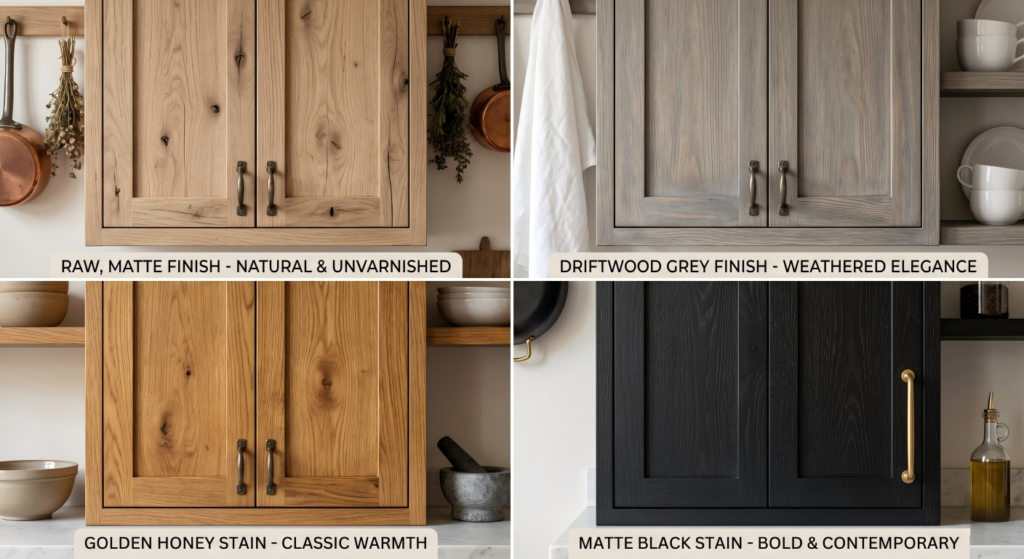
- Whitewashed or Limed Oak: A white-tinted hardwax oil or diluted white paint creates a Scandinavian or coastal farmhouse aesthetic that feels both rustic and fresh
- Deep Charcoal Stain: Dark-stained rustic oak pairs with light stone counters for a dramatic, moody kitchen with serious depth
- Natural Matte Oil: Completely raw, close-to-bare-wood finish that emphasizes sustainability and honest materials
- Two-Tone Cabinets: Upper cabinets painted in matte sage or cream while lower cabinets are left in natural-stained oak — the contrast is striking
- Ebonized Oak: Using iron acetate or black stain to create a near-black finish that still shows grain texture — very dramatic and avant-garde
Frequently Asked Questions About Finishing Rustic Oak Kitchen Cabinets
What is the most durable finish for rustic oak kitchen cabinets?
Conversion varnish and two-part polyurethane are the most durable options for kitchen environments, offering the best resistance to moisture, heat, and abrasion. For DIY applications, water-based polyurethane in satin finish is the next best choice.
Should I use oil-based or water-based finish on rustic oak?
Both work well on rustic oak. Oil-based products tend to amber over time, which can beautifully enhance oak’s warm tones. Water-based products dry faster, stay clearer, and have lower VOCs. If you want to maintain the natural golden color of the oak without yellowing, water-based is preferred.
Can you paint rustic oak kitchen cabinets?
Yes, absolutely. Painting rustic oak cabinets is a popular and effective way to refresh or completely transform a kitchen. The key is to use a stain-blocking oil-based or shellac primer first to prevent tannin bleed-through, then apply a durable cabinet-grade paint in your chosen color.
How often do I need to re-finish rustic oak cabinets?
It depends on the finish. Hardwax oil typically needs reapplication every 1–3 years depending on use. Quality polyurethane and conversion varnish can last 10–15 years before needing refinishing, though light touch-ups may be needed in high-wear areas. Wax finishes need the most frequent maintenance — every 6–12 months.
Final Thoughts: Choosing the Perfect Finish for Rustic Oak Kitchen Cabinets
Rustic oak kitchen cabinets are a long-term investment in beauty and character. The finish you choose should honor the natural quality of the wood, protect it from the rigors of daily kitchen life, and complement your design vision for years to come.
To summarize the best choices:
- Best for natural look + durability: Hardwax oil or satin water-based polyurethane
- Best for traditional farmhouse style: Oil-based stain in walnut or golden oak + satin polyurethane
- Best for professional-grade protection: Conversion varnish
- Best for a modern farmhouse twist: Cabinet-grade painted finish in sage, cream, or navy
- Best for an ultra-rustic, aged aesthetic: Wax over chalk paint or milk paint
Whatever direction you choose, remember: the best finish for rustic oak kitchen cabinets is the one that makes you fall in love with your kitchen every single time you walk in. Take your time, test your options, and trust the process. Great craftsmanship always pays off.