In the rapidly evolving landscape of outdoor architecture, the demand for high-performance, low-maintenance building materials has reached an all-time high. For architects, developers, and general contractors, the days of specifying pressure-treated lumber for high-traffic commercial zones or luxury residential terraces are largely over. The market has shifted decisively toward engineered solutions.
However, a significant ambiguity remains in the industry. We frequently encounter project managers and buyers who use terms like “synthetic decking,” “plastic lumber,” “composite,” and “Polywood” interchangeably. While they all fall under the umbrella of outdoor decking solutions, treating them as identical commodities is a critical error.
The two dominant contenders in this space are Wood Plastic Composite (WPC) and Polywood (High-Density Polyethylene or HDPE).
While both promise to eliminate the sanding and staining required by natural wood, their chemical compositions, structural behaviors, and aesthetic qualities differ largely. This comprehensive guide will dissect the technical nuances between WPC and HDPE, analyze their ROI for commercial applications, and explain why the Melinco Composite System is increasingly the preferred specification for high-end projects.
Table of Contents
1. The Anatomy of Engineered Decking: Defining the Contenders
To make an informed decision, we must first strip away the marketing jargon and look at the chemistry and manufacturing processes of these materials.
What is Polywood (HDPE)?
Polywood, often colloquially referred to as “plastic lumber,” is a fully synthetic material. It is composed primarily of High-Density Polyethylene (HDPE).
Source Material: It is largely derived from post-consumer recycled plastics, such as milk jugs, detergent bottles, and shampoo containers.
Structure: It contains zero organic material. It is a thermoplastic resin that is melted down, mixed with pigments and UV inhibitors, and extruded into board shapes.
Characteristics: Because it is 100% plastic, it is dense, heavy, and chemically inert.
What is Composite Decking (WPC)?
Wood Plastic Composite (WPC) is a hybrid material that leverages the best properties of nature and engineering.
Source Material: WPC is created by blending wood fibers (often recycled wood flour or sawdust from furniture manufacturing) with heated thermoplastic resins and binding agents.
Structure: The wood provides stiffness and UV filtering, while the plastic provides water resistance and durability.
The Melinco Difference: Standard composites are good; Melinco’s Composite System is exceptional. We utilize a proprietary “Golden Formula” for our substrate. By scientifically optimizing the ratio of wood powder to polymer, we achieve a board that offers the rigidity of timber with the longevity of advanced plastics.
Moreover, modern WPC (like Melinco’s) utilizes Co-extrusion Technology. This involves fusing a protective “cap” or shield around the core material during the extrusion process. This “Armor Cap” is the industry standard for eco-friendly decking that resists stains, fading, and scratches.
2. Aesthetics: The “Uncanny Valley” of Decking
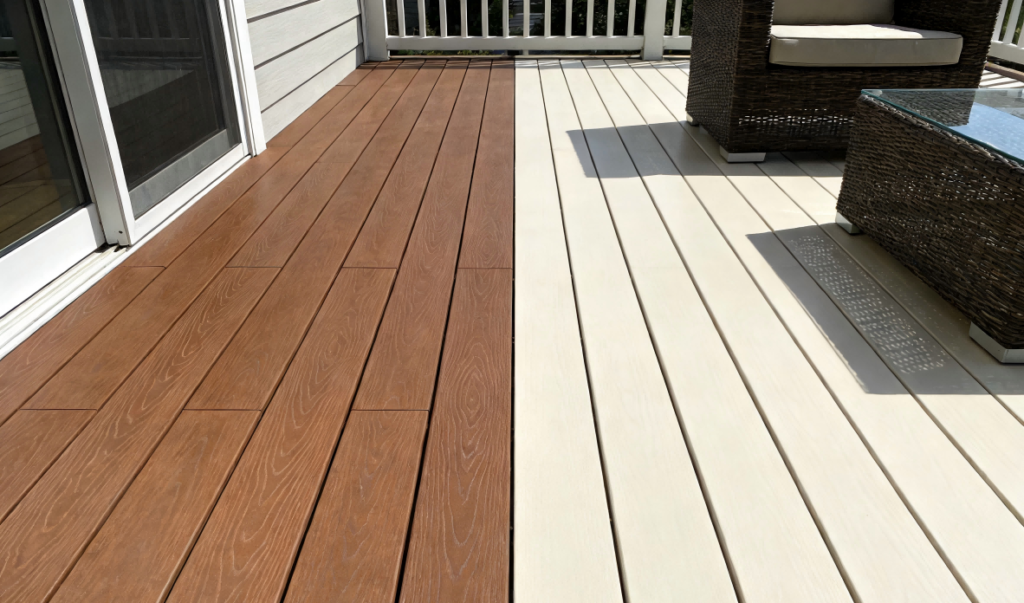
For architects designing a 5-star hotel pool deck or a luxury villa facade, aesthetics are not negotiable. The goal is often to achieve the warmth and biophilic appeal of natural wood without the maintenance.
The Polywood (HDPE) Look
Because HDPE is 100% plastic, it struggles to mimic natural materials convincingly.
Texture: HDPE boards often have a “waxy” or glossy sheen that looks distinctly synthetic, especially in direct sunlight.
Uniformity: While manufacturers add texture, the color tends to be very flat and uniform. This lack of variation can make a large deck look industrial or “cheap,” resembling fast-food furniture rather than architectural timber.
The Composite (WPC) Advantage
This is where WPC, and specifically Melinco, shines. Because the core contains real wood fiber, the material absorbs pigments and textures more naturally.
Depth of Grain: Melinco’s manufacturing process allows for deep-embossing wood grains that trap light and shadow just like real timber.
Matte Finish: Our co-extrusion cap layer is engineered to have a matte finish, eliminating the plastic glare.
380+ Textures: Melinco offers an expansive library of over 380 textures and colors. From the subtle greys of weathered driftwood to the deep, reddish-browns of Ipe and Mahogany, we provide options that are virtually indistinguishable from natural hardwood.
Verdict: For high-end aesthetics, WPC is the clear winner. HDPE cannot compete with the natural realism of high-quality composite.
3. Structural Stability and Thermodynamics: A Critical Technical Analysis
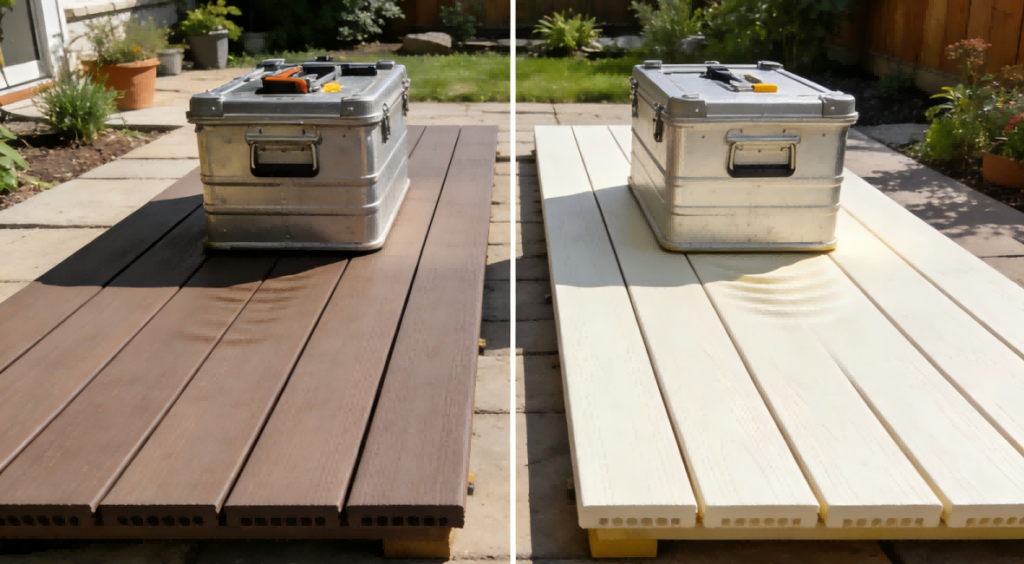
One of the most overlooked aspects of decking specification is Thermal Expansion and Contraction. All materials move as temperatures fluctuate, but the degree of movement dictates the longevity of the installation.
The Physics of HDPE (Polywood)
Plastics have a high Coefficient of Linear Thermal Expansion (CLTE).
Heat Retention: HDPE retains significant heat. In a commercial setting (like a hotel poolside), plastic boards can become scorching hot—often too hot for bare feet.
Movement: In regions with temperature swings (e.g., hot days and cool nights), HDPE expands and contracts aggressively.
The Risk: This constant movement puts immense stress on fasteners. Over time, this can lead to “snake-lining” (where the boards warp out of alignment), popped screws, or buckled surfaces. To mitigate this, contractors must leave large, unsightly expansion gaps between boards.
The Physics of WPC (Composite)
Wood is a natural insulator and is dimensionally stable. By introducing wood fibers into the plastic matrix, WPC gains significant stability.
Structural Rigidity: The wood fibers act as reinforcement (similar to rebar in concrete), restricting the movement of the plastic.
Lower Expansion: WPC expands significantly less than HDPE. This allows for tighter gaps during installation, creating a cleaner, seamless look.
Load Bearing: WPC is generally stiffer than HDPE. This creates a solid, confident feel underfoot, whereas HDPE can sometimes feel “bouncy” or flexible unless the joist spacing is very tight.
Verdict: Melinco’s Composite System offers superior dimensional stability, ensuring the deck remains flat, safe, and visually precise for decades.
4. Durability and Resistance to Elements
Both materials are marketed as “low maintenance,” but they handle environmental stressors differently.
Moisture Resistance
HDPE: Being 100% plastic, it is completely waterproof. It is ideal for docks that are fully submerged in water.
Capped WPC: Early generations of composite (uncapped) had issues with mold feeding on the wood fibers. However, Melinco’s modern Co-extruded WPC is fully encapsulated in a high-performance polymer shield. This shield makes the board impervious to water, oil, and wine stains. Unless you are building a dock underwater, capped WPC offers all the moisture resistance a project needs.
Scratch and Impact Resistance
HDPE: While tough, softer plastics can be prone to gouging from heavy furniture or high heels. Scratches on solid plastic can be difficult to repair without leaving visible marks.
WPC: The hard outer shell of capped composite is engineered specifically for abrasion resistance. It withstands the drag of patio furniture and high foot traffic in commercial zones.
5. Installation and “Hidden Costs”
When analyzing the budget for outdoor decking solutions, the cost of the board is only one factor. Installation requirements can drastically change the total project cost.
The Support Structure (Joist Spacing)
Because HDPE is more flexible (less rigid) than Composite, it typically requires tighter joist spacing to prevent sagging.
HDPE Requirement: Often requires joists spaced at 12 inches on center (OC) for residential use, or even 10 inches for commercial diagonal patterns.
WPC Requirement: High-quality WPC can typically span 16 inches on center.
The Economic Impact: Using HDPE often requires 25% to 30% more pressure-treated lumber for the substructure, plus the additional labor to frame it. This hidden cost often negates any price savings on the deck boards themselves.
Melinco’s Installation Ecosystem
Melinco streamlines this process with our Integrated System. We provide not just the boards, but the clips, fasteners, and edge-finishing components designed to work in harmony. This reduces installation errors and speeds up the contractor’s workflow.
6. Detailed Comparison Matrix
For a quick reference during your specification process, review the technical breakdown below.
| Feature | Wood Plastic Composite (WPC) | Polywood (HDPE) | The Melinco Difference |
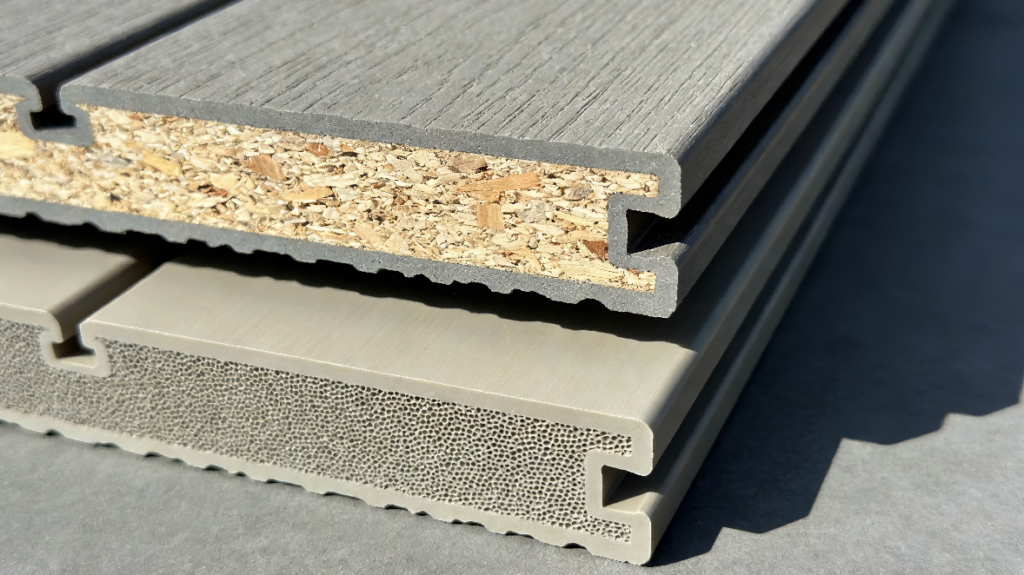
| Primary Composition | Wood Fiber (60%) + HDPE (30%) + Additives (10%) | 100% Recycled HDPE Plastic | Golden Formula substrate for max rigidity. |
| Visual Realism | Excellent. Mimics natural timber grain and variation. | Fair. Can look waxy, uniform, and synthetic. | 380+ textures including exotic wood grains. |
| Thermal Expansion | Low. Stable in temperature fluctuations. | High. Expands/contracts significantly in heat. | Enhanced stability reducing fastener fatigue. |
| Heat Absorption | Moderate. Warm, but generally walkable. | High. Can become uncomfortably hot. | Optimized surface formulation for comfort. |
| Structural Stiffness | High. Spans 16″ joists easily. | Low. Flexible; often requires 12″ joist spacing. | Rigid profile feels solid like concrete/wood. |
| Moisture Resistance | Excellent (when capped/co-extruded). | Excellent. Completely waterproof. | 360-degree capping prevents any absorption. |
| Maintenance | Soap and water cleaning. | Soap and water cleaning. | Stain-resistant shield makes cleaning effortless. |
| Best Application | Hotels, Residential, Facades, Balconies. | Marinas, Docks, Industrial wet zones. | Integrated Door-Wall-Cabinet-Decking system. |
7. Sustainability and The Green Building Movement
Sustainability is no longer a trend; it is a requirement. Both materials claim to be eco-friendly decking, but WPC contributes to the circular economy in a unique way.
WPC consumes waste from two streams:
Plastic Waste: Recycled bottles and containers.
Wood Waste: Sawdust and scraps from the lumber industry that would otherwise be burned or landfilled.
By choosing Melinco, you are participating in a process that saves thousands of tons of plastic and wood waste from landfills annually. Furthermore, our manufacturing process creates zero water waste, aligning with the sustainability goals of modern LEED-certified commercial projects.
8. Expert Verdict: Choosing the Right Solution for Your Project
As a Senior Specialist in this field, I recommend different materials based on the specific “pain points” of the project location and purpose.
Scenario A: The Luxury Hotel Resort or High-End Residence
Recommendation: Melinco WPC Composite
Why: In hospitality, the “Guest Experience” is paramount. A deck that looks fake or feels plasticky underfoot diminishes the brand value.
Benefit: Melinco’s realistic wood grain provides the luxury aesthetic of Ipe or Teak without the annual oiling/staining costs. The dimensional stability ensures no tripping hazards develop over time due to warping.
Scenario B: The Commercial Boardwalk or Public Park
Recommendation: Capped WPC Composite
Why: High traffic requires high scratch resistance and structural rigidity. Public spaces cannot afford to close down for repairs.
Benefit: The rigidity of WPC allows for wider spans, saving public funds on substructure costs, while the capped surface resists graffiti and gum adhesion better than porous wood.
Scenario C: The Freshwater/Saltwater Dock (Submerged)
Recommendation: HDPE or Marine-Grade WPC
Why: If the material is in constant contact with water (splash zones), HDPE’s lack of organic material is a benefit.
Nuance: However, for the surface decking of a dock (which sits above the water), Capped WPC is still often preferred for its barefoot comfort (less heat) and slip resistance.
9. The Melinco Vision: The “Door-Wall-Cabinet-Decking” Integrated System
Why do leading architects choose Melinco? It isn’t just about a single deck board. It is about Design Consistency.
In modern architecture, the boundary between “indoor” and “outdoor” is dissolving. Developers want the flooring of the living room to visually flow onto the terrace. They want the exterior cladding to match the interior cabinetry.
Sourcing these materials from different vendors (e.g., buying HDPE for the deck, aluminum for the fence, and wood for the interior) results in a chaotic, mismatched aesthetic.
Melinco offers a unified solution.
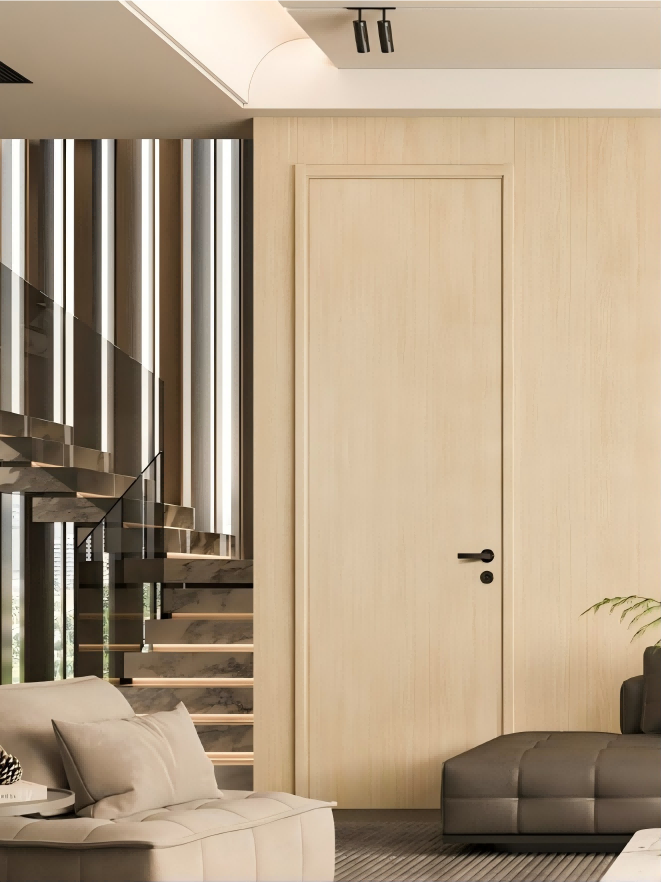
Our Integrated System allows you to utilize the same high-performance composite technology and color palette across:
Outdoor Decking
Exterior Wall Cladding
Fencing & Louvers
Interior Cabinetry & Doors
This holistic approach guarantees perfect color matching, consistent aging, and a unified warranty provider for the entire building envelope.
Conclusion
While Polywood (HDPE) has its merits in strictly utilitarian or industrial marine applications, it falls short in the categories that matter most to residential and commercial property owners: Aesthetics, Structural Stability, and Thermal Comfort.
Wood Plastic Composite (WPC) represents the pinnacle of material science—delivering the soul of wood with the armor of engineering.
When you choose Melinco, you are choosing more than just a deck. You are choosing a “Golden Formula” substrate, industry-leading co-extrusion technology, and a design partner capable of harmonizing your entire project from the front door to the back garden.
Don’t let your project suffer from the “plastic look” or structural instability. Choose the solution that balances beauty, durability, and ROI.